

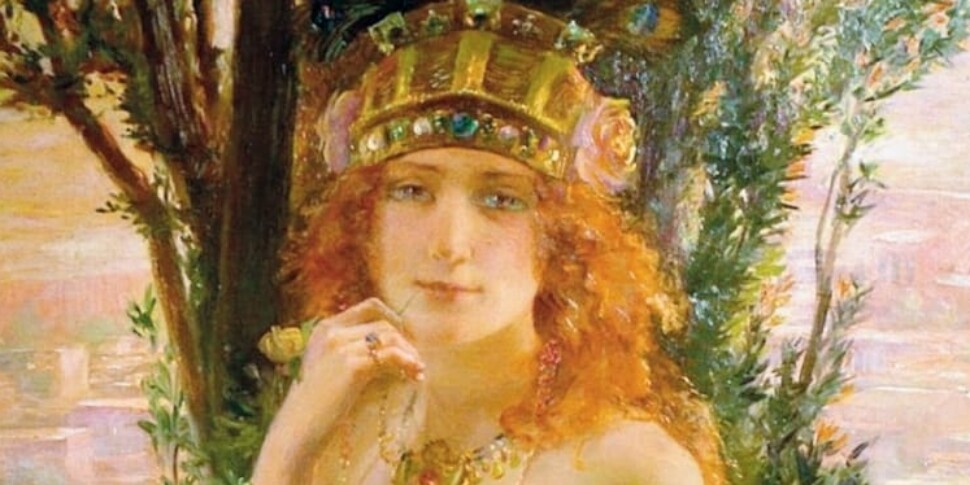
Elena is a free woman, a rebel. But he was a victim of his own desires.” With «The most beautiful. Elena’s version” (HarperCollins), Brunella Schisa returns to bookstores with a novel that delves into the soul of the most celebrated and misunderstood woman in the myth, finally giving her back her own voice. Neapolitan journalist and writer, Schisa rereads the archetype, breaking the image of Elena as an object of male desire and bringing her back to the zero degree of her humanity. It shows the wound, the choice, the presumed guilt, the denied desire, entering into the wake of the most important rewritings of the female myth.
Why did you choose Elena?
«Because she was one of the first women in the myth to choose, to pay personally for having done so. This is why I consider her a very modern figure. She was very different from her contemporaries: in the Bronze Age women were an ornament, a property. Elena speaks, thinks, decides. And this condemns her in the eyes of others.”
Myth has blamed her for centuries. Why so much fury?
«Because it is always easier to accuse a woman than to look at the real reasons. Homer puts words of remorse in her mouth for causing the war, but that is a functional narrative. Elena becomes the ideal target on which to unload male violence and the political responsibility of a massacre.”
So, the war wasn’t his fault?
“Absolutely not. Elena was a magnificent excuse. The Trojan War was fought for economic reasons: Troy controlled the Dardanelles Strait and ship passages. The “escape” with Paris was only a narrative device. The myth was born within a patriarchal civilization founded on violence, in which women were objects of pleasure or symbols of status.”
In your novels you often return to divergent female figures…
«Because they are cracks in the dominant narrative. Elena is a rebel ante litteram, a woman who performs an act of audacity and submits herself to the judgment of the masses. But, for me, she is above all a victim of herself, not of the gods. Hecuba is right when in The Trojan Women she says: “You will all hide behind Aphrodite”.
He reread Homer, but also Aeschylus, Sophocles, Euripides and Virgil. What did he get out of it?
«That the story changes a lot depending on the voice that tells it. In the end, Euripides convinced me, who turns the myth on its head and describes Helen as faithful to her husband: she doesn’t run away with Paris and only an eidolon, a ghost, arrives in Troy. The Achaeans would therefore have fought for an illusion. I inserted this possibility into a dream, also following Christa Wolf’s suggestion.”
Is beauty her gift or her condemnation?
“Both. Her father Tindaro experienced her as a burden. At twelve years old she was kidnapped by Theseus and raped before being freed. Anyone who says that beauty protects is lying: in myth it is almost always a cross.”
Are the gifts of the gods a curse?
“Yes. In the world of myth they are never chosen: you receive them and they dominate you. It goes for Cassandra, it goes for Achilles, it goes for Helena. There is no redemption, only destiny.”
Is rereading the myth a liberating gesture?
“Absolutely. We deal with events from the 12th century BC, but the themes are very current. The Iliad is not a love poem: it is a book of blood. Homer tells everything, torn entrails, raped women, severed heads, without hiding anything. Today, images of conflicts reach us everywhere, but we end up anesthetized. Homer, on the other hand, forces us to look.”
There is a lot of eros in the novel.
«Yes, because eros is knowledge. Elena frees herself: she wants control of her body, claims her desires. Eros is fundamental to understanding who he really was. I don’t understand why it’s so rare in female writing.”
There is also a little mystery in its history.
«Yes: in the fourth book of the Odyssey, Telemachus arrives in Sparta to get news of his father and finds Menelaus and Helen together. Has she been forgiven? Or did she return for reasons of state? I was interested in entering the minds of both: Menelaus is an exhausted man, torn between hatred and forgiveness.”
The female figures of the Iliad are often two-dimensional. Is Elena an exception?
“Unfortunately not. Many women in the epic act on impulse, they are sketched on the surface. Andromache is an exception. But Elena, for millennia, was told by men: only her voice was missing.”