

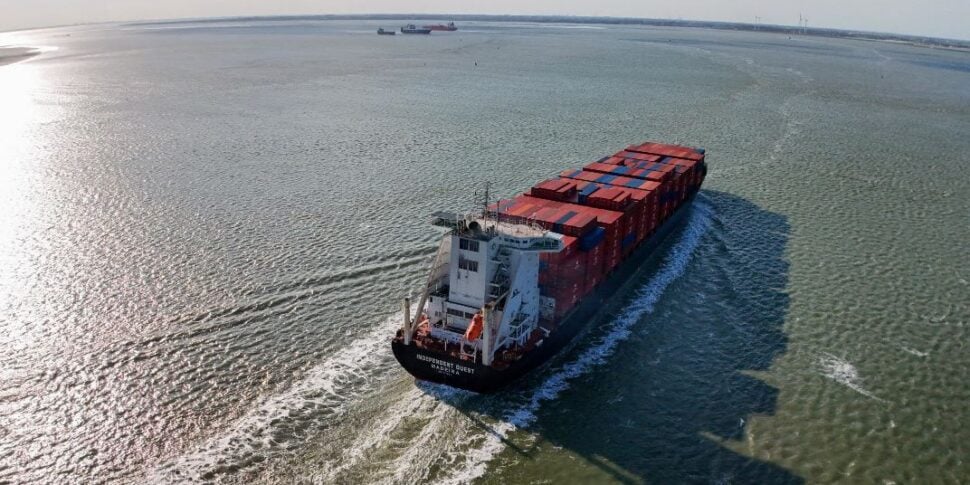
Tensions rise again in the Strait of Hormuz as the United States relaunches its military presence in the area with Operation “Project Freedom”. Donald Trump spoke directly, claiming the success of the initiative from the White House: “The military operation, or call it what you like, in Iran is going very well”, he declared, firmly reiterating that Tehran “will never have a nuclear weapon”. During an event dedicated to small businesses, the American president also claimed the economic results of his administration, claiming that the United States “is making America great” and that “record business” is being recorded. But it is above all on the international front that attention remains high.
Operation “Project Freedom”, launched in recent weeks, has in fact reignited the conflict between Washington and Tehran, putting at risk the fragile ceasefire in force for about a month. Both sides claim control of the strategic Strait of Hormuz and promise harsh responses in case of violations. Trump raised the tone further, going so far as to declare that “Iran will be wiped off the face of the Earth” if it were to attack the American ships involved in the mission. Words that contrast with previous openings from the president himself, who had defined Tehran as “more malleable” and the negotiations as “very positive”. The United States, he added, has “more munitions and bases around the world” and is ready to use them “if necessary”.
According to the American Central Command (US Centcom), US forces intercepted Iranian missiles and drones aimed at American ships, also neutralizing some suspicious vessels. The US naval units would also have facilitated the passage of two American-flagged commercial ships through the Strait, helping to open a safe corridor.
Version completely rejected by Tehran, which speaks of “totally false” information and claims that no ship crossed Hormuz without its control. Iranian authorities also claim to have hit an American warship near Jask Island, a circumstance promptly denied by Washington. Between accusations and divergent reconstructions, the only confirmed episode concerns a South Korean ship hit in the Strait. Trump took the opportunity to invite Seoul to join the operation, while Treasury Secretary Scott Bessent also urged China to apply pressure on Iran. Meanwhile, tension has spread throughout the Middle East. Iranian cruise missiles and drones hit the United Arab Emirates, causing a fire at a power plant in Fujairah. Accidents also occurred in Oman, with two injured in Bukha, while Bahrain has raised the alert level to the maximum. Tehran has denied deliberately targeting the Emirates, but in such a volatile context even a mistake can trigger an escalation. According to rumors, Israel is ready to resume military operations at the first signal from the United States. Meanwhile, the real perimeter of “Project Freedom” remains unclear. The American administration defined the operation as a “humanitarian” mission to free the ships blocked for months in the Strait, but without providing concrete details on the methods of intervention. The idea would be to “guide” the boats out of Hormuz, but times and strategies remain uncertain.