

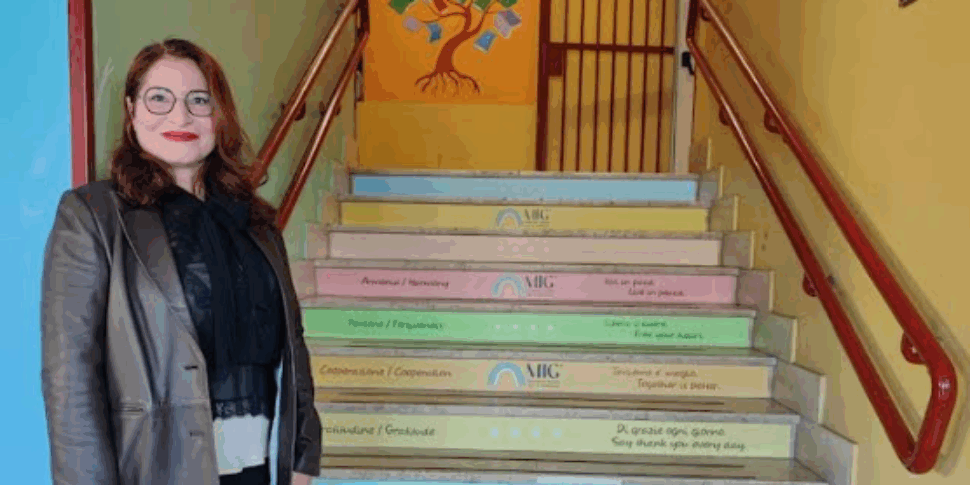
“Be courageous in kindness, because that is where the future of a more just and humane society lies.” Natalia Re, president of the Italian Kindness Movement, thus addresses the new generations, convinced that kindness is not an isolated gesture, but a driver of collective change.
He retraces with us the history of a movement born in Parma twenty-five years ago and which has now arrived at institutional tables with a bill that aims to make kindness a concrete indicator of social well-being.
«Today we are in a very positive phase – explains Re – We have started a process of listening and sharing with the Government and we are confident in a rapid bicameral activity. It is an important signal: kindness is no longer perceived as an abstract concept, but as a concrete lever of progress. We are working to ensure that the proposal is scheduled and discussed.”
The heart of the proposal is the Kindness Act, which is based on three axes: economy, education and work. The objective is to include kindness as the thirteenth BES indicator (Fair and Sustainable Wellbeing), alongside the already existing economic and social parameters.
«Well-being is not only measured with economic parameters – underlines the president – but also with the quality of relationships, trust and civic participation. Kindness, if systematised, generates social capital.” From his story emerges the desire to make kindness a transversal, measurable and recognized skill, capable of impacting public choices and social development.
A central role is entrusted to young people. «The new generations are the most authentic force of the Movement. Every day in schools we find enthusiasm, creativity and the desire to build a more respectful and attentive world. We have developed educational courses on kindness as a soft skill by collaborating with teachers, managers and families to make it an integral part of citizenship skills. Young people not only participate: they are co-creators of projects, witnesses of kindness in their communities.” The president underlines how girls and boys are not simply recipients, but active protagonists of cultural change. It is in schools that the Movement finds its most authentic energy, transforming kindness into daily practice and citizenship competence. Looking to the future, Re indicates three lines of work: institutional dialogue for the approval of the Kindness Act, training in schools and workplaces and the creation of territorial networks to spread good practices. «To the institutions I say: listen to the voice of the citizens who are asking for a profound cultural change. I remind citizens: kindness is a political act, every gesture can generate trust and beauty” concludes the president, convinced that kindness, from a daily value, can be transformed into a force capable of guiding the future of society.