

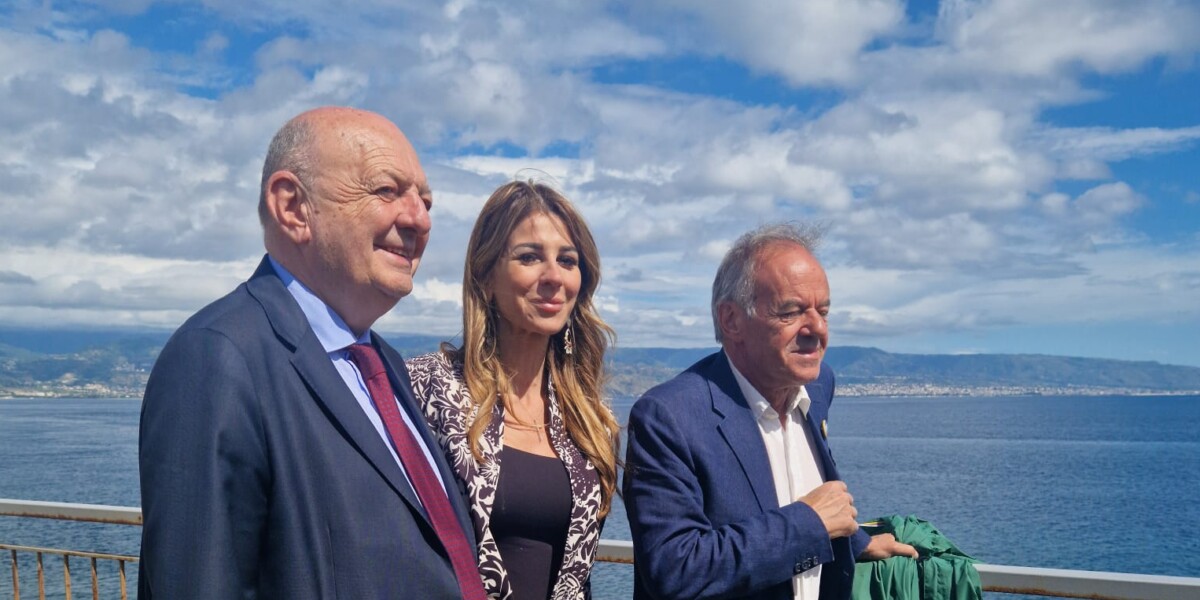
“The time has come to free this area, which is the cradle of the city of Messina”. With these words, the Minister of the Environment and Energy Security, Gilberto Pichetto Fratin, relaunched the recovery project of the Falcata area during an institutional visit to the city of the Strait together with the centre-right mayoral candidate Marcello Scurria, the deputy mayor Matilde Siracusano and the representatives of the coalition and the civic lists.
The minister underlined the need to return the area to the community, aiming for a balance between urban development and environmental protection. “It means allowing it to be usable and restored to a condition of environmental balance,” he explained, defining the relaunch project of the Falce dello Strait as strategic.
According to Pichetto Fratin, significant investments will be necessary to achieve a complete redevelopment. “20 million is probably not enough for a definitive solution, but it is the right way to deliver a livable territory to future generations,” he said, referring to the plan proposed by Scurria. The minister also recalled the constitutional value of environmental protection, included in 2022 among the fundamental principles of the Charter.
“Today, almost eighty years later, we realize that what was the country’s economic and social growth has also created damage and situations that we absolutely must restore,” he declared. The visit to the Falcata area is part of the programmatic initiatives promoted by the centre-right mayoral candidate for the relaunch of the area, considered central for the development of the territory and for the project of the future Metropolitan City of the Strait.
During the day, Pichetto Fratin also addressed the topic of waste management in Sicily, expressing his support for the construction of the two waste-to-energy plants planned by the Region. “I agree with the choice of the two waste-to-energy plants that the Sicilian Region has designed,” said the minister.
According to the owner of the Environment, the current system is no longer sustainable: “We cannot fill our country with landfills with a very high daily production of garbage.”
Pichetto Fratin explained that the use of waste-to-energy plants must in any case be accompanied by efficient separate collection and an adequate waste selection system. “The transition to waste-to-energy plants – he concluded – is a step forward that can also create the conditions to produce energy for the benefit of the local reality”.