

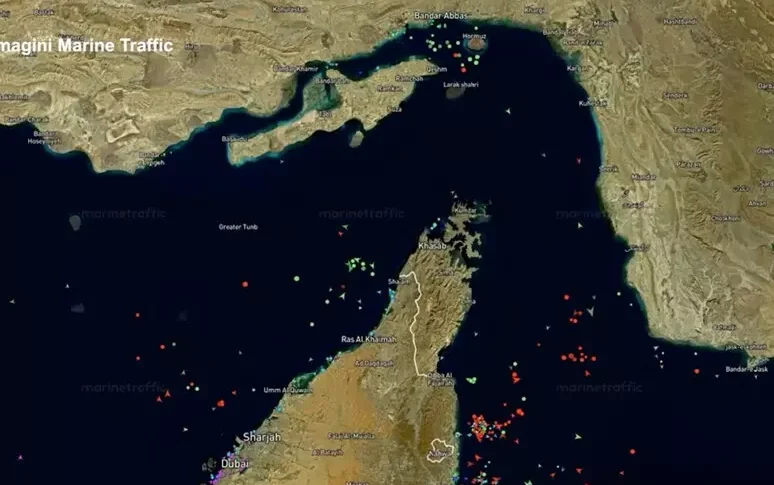
Iran is once again closing the Strait of Hormuz, bringing it back under “strict control”, in response to the continuation of the US blockade on its ports, three days after the expiry of the ceasefire between Tehran and Washington and while a peace agreement still appears far away. After announcing on Friday a reopening of the crucial sea route, through which about a fifth of global oil and gas trade normally passes, the Islamic Republic backtracked, reinstating restrictions and once again raising the level of conflict. Shortly after the announcement, at least three commercial ships attempting to cross the strait were shot at, while the Revolutionary Guards warned that any attempt to approach will be considered a form of cooperation with the enemy and will therefore be targeted. The reaction of US President Donald Trump was harsh, accusing Tehran of “blackmail”.
The new escalation comes after more than a month of war which has caused thousands of deaths in Iran and Lebanon and has had serious repercussions on the global economy. Only two days ago the announcement of the reopening of the Strait had given impetus to the financial markets and led to a sharp drop in oil prices, but the new tightening now risks generating new turbulence when the markets reopen.
Other negotiations possible
On the diplomatic level, an intense effort is underway to bring Iran and the United States back to the negotiating table, after the failure of the first meeting on April 12 in Islamabad. Egyptian Foreign Minister Badr Abdelatty declared that he is working “non-stop” together with Pakistan to encourage a resumption of dialogue. However, the positions remain distant: Trump claimed that Tehran would have agreed to hand over its enriched uranium, the central point of the dispute, but Iran has denied this. The speaker of the Iranian Parliament Mohammad Bagher Ghalibaf, who participated in the talks with the American delegation led by Vice President JD Vance, admitted some progress but underlined that “many differences remain” and that “several fundamental points remain pending”, also reiterating the total lack of trust towards the United States and inviting Washington to abandon a unilateral approach.
The Lebanese front
Meanwhile, the conflict continues to reverberate on the Lebanese front as well. In the south of the country, a French soldier from the Unifil mission was killed and three others were injured, two seriously, in an ambush attributed to Hezbollah, which however denied any involvement. The episode occurred the day after a ten-day truce came into force. In the same area, the Israeli army announced that it had established a “yellow line” of demarcation, on the model of what was done in Gaza, and that it had eliminated a “terrorist cell” operating near its troops, also reporting the deaths of two soldiers since the start of the truce.
For his part, Hezbollah leader Naim Qassem warned that the ceasefire cannot be unilateral: “Because we do not trust the enemy, the resistance fighters will remain on the ground, with their finger on the trigger, ready to respond to any violation.” In the southern outskirts of Beirut, a stronghold of the Shiite movement, many civilians took advantage of the pause in the fighting to return to check their homes, only to then return to makeshift camps along the coast for fear of new raids.
The war in Lebanon began on March 2, when Hezbollah attacked Israel in response to the Israeli-American offensive against Iran. According to the authorities, Israeli bombings have caused at least 2,300 deaths and displaced over a million, further worsening an already extremely serious regional crisis.