

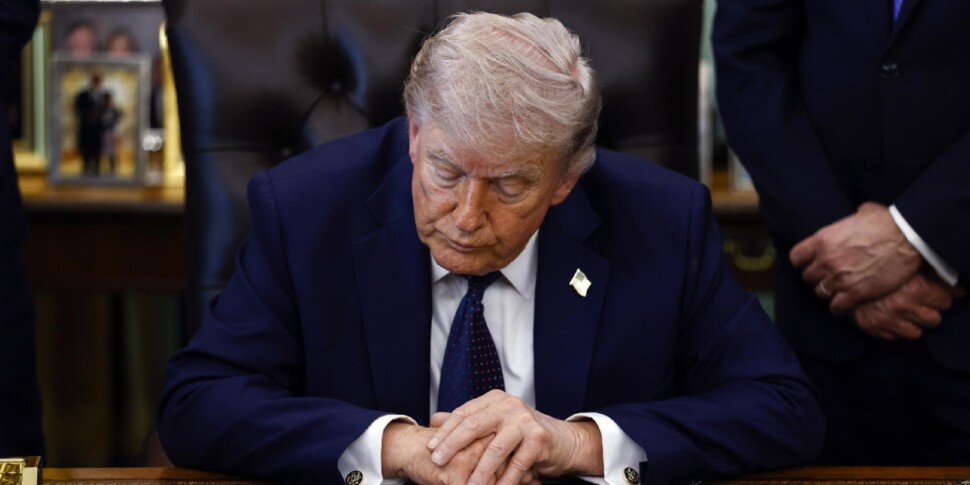
In a surprise move, Donald Trump cancels the trip of his envoys Steve Witkoff and Jared Kushner to resume talks with Tehran in Islamabad. The president made the announcement on Fox News and Axios shortly after Iranian Foreign Minister Abbas Araghchi left for Muscat, leaving the Pakistani capital, where he met with Prime Minister Shehbaz Sharif and army chief Asim Munir, delivering an “exhaustive” response from Tehran to American conditions and proposals for Pakistani mediation.
The negotiating stalemate and the “cards in hand” of the USA
The response evidently does not substantially change the position of the Islamic Republic, which had reiterated that it did not want to give in to US “maximalist demands”. The cancellation of the mission is yet another sign that the two sides are far from reaching an agreement, despite the White House speaking of “progress” on Friday.
Trump explained to Fox News that it was useless to undertake such a long journey without making progress: “I told my collaborators: ‘No, you are not going to take an 18-hour flight to sit around and talk about nothing.’ We have all the cards in our hands. They can call us whenever they want.” When asked about a possible risk of war, the commander in chief replied with the usual ambiguity: «No. We haven’t thought about it yet.”
Instability in Tehran and the role of diplomacy
Finally, Trump made his decision official on Truth, evoking what is perhaps the real reason for the new stalemate: the internal divisions within the Iranian regime between hawks and doves. “There is enormous infighting and confusion within their leadership,” he wrote.
A climate of profound mistrust remains; Araghchi, while calling his visit to Pakistan “very fruitful”, raised doubts about the real diplomatic will of the United States. A cold shower also for Pakistani negotiators and for Moscow, which had offered to guard the Iranian enriched uranium, but encountered opposition from Trump.
The crux of the conflict: nuclear power, sanctions and the Strait of Hormuz
There remain many issues to be resolved: from the nuclear and ballistic program to support for proxies, up to the unblocking of the Strait of Hormuz. Tehran insists on the lifting of sanctions, the naval blockade on ports and for war reparations. Meanwhile, Hormuz remains closed, although some ships (such as the oligarch Mordashov’s yacht) manage to transit. The truce also remains fragile in southern Lebanon, where clashes between Israel and Hezbollah continue.
Economic consequences and markets at risk
From Monday, without sudden changes, the markets could turn towards the red. Treasury Secretary Scott Bessent announced that the United States will not renew waivers for the purchase of Russian and Iranian oil. According to Bessent, Iran will have to start interrupting production in the next few days, a very hard blow for their wells but also potentially dangerous for American inflation and for the Republicans in view of the midterm elections.