

And finally silence fell. Some hoped for it, so harsh were the tones of a long electoral campaign peppered with controversial episodes. Now the time for words is coming to an end, tomorrow the time for facts will open, for pencil strokes on the sheet-cards from which, on Monday evening, the name of the future mayor will emerge or, alternatively, the run-off duel. For the second time in a row Messina goes to the vote after the resignation of a mayor, for the first time ever the resigning mayor comes back to ask for an encore which, also in this case, would be unprecedented since direct elections existed.
The path that has led to today starts from afar, well before the resignation announced on 7 February and which became effective twenty days later. When in October Federico Basile and Cateno De Luca present themselves to the press with two symbols ready for as many lists – they do not know, at that stage, that the symbol itself will become a theme – for as many lists, it becomes inevitable to start to smell early elections, despite the timid ritual denials. And Basile’s resignation arrives, accompanied by reasons that are only partially convincing: the choice is attributed to the absence of a majority in the city council and, therefore, to the alleged “walls” erected by an opposition which, in reality, up until that moment had been anything but obstructionist. The feeling, in reality, is that the decision is the result of a political strategy, which leads directly to the need of South calls North, and therefore of Cateno De Luca, to bring forward the electoral moment in Messina compared to those scheduled for 2027 (or before?), namely the Regional and Political elections. And this is the first thing at stake in these administrative elections for De Luca, Basile and their party: reconquering Palazzo Zanca, of course, but doing so with numbers that not only ensure an important majority in the city council, but also and above all create an important “business card” in view of the tables that will open with future, potential allies. Of which coalition, this is not yet known.
This is the starting point, what the arrival point will be – after weeks of changes of shirt and a monstrous number of lists – will be discovered in a few hours, when the results of the other ongoing political matches are known. Even that of Marcello Scurria, for example, starts from afar: over a year ago the administrative lawyer who, over the years, has frequented the municipal building with various mayors in the role of technician (the last political role was that of secretary of the DS, more than twenty years ago), had created the civic movement Partecipazione. An impulse driven by bitterness for the stormy conclusion of the experience of sub-commissioner for the redevelopment of the slums of Messina, a political sacrifice on the altar of the dialogue that had just begun at the time between the commissioner for redevelopment, the regional governor Renato Schifani, and Cateno De Luca himself, but also of internal balances within the Center-Right itself. Over the months, Scurria worked to build a project and, when it came down to Basile’s resignation, he “handed it over” to the center-right of Messina, while continuing to claim his civic being, sponsored by Forza Italia undersecretary Matilde Siracusano. After a couple of weeks of “polls”, the investiture takes place, even before Basile’s resignation becomes definitive. And this is the real moment of the start of an electoral campaign that begins immediately among the sparks, with a leitmotif that will be permanent: the back and forth between Scurria, Basile and, above all, De Luca, on the basis of past grievances, whose origins date back to Scurria himself’s farewell to Arisme, immediately after the 2022 elections. This is why, in Scurria’s match, several challenges end up mixing: the personal one of the former sub commissioner, the political one of Matilde Siracusano and the one entirely within the centre-right, with power relations that could change after 25 May.
In the meantime, the Center-Left is struggling to find a square, the table of the so-called progressive camp opens and closes several times, there is even a split in the provincial leadership of the Democratic Party, but in the end the choice falls on Antonella Russo, the only woman to stand as a candidate in this round, the first to aspire to the tricolor band representing a coalition. A coalition which, however, manages to express only two lists, with the 5 Star Movement and Countercurrent forced to unite forces and symbols to set up a team, and a broad field which, in these elections, seems to have narrowed in Messina. Here the game will open after the vote, based on the outcome of the vote itself. Inside the Democratic Party, inside the coalition.
The names of two outsiders also come out: Gaetano Sciacca is the best known, former chief engineer of the Civil Engineering Department, a technician who has often been linked to regional politics and already a candidate in 2018 with the 5 Star Movement (with which he was also elected to the Council); Lillo Valvieri is the solitary variable, the hairdresser whose dream is to be among the mayoral candidates, who wins his personal challenge, by his own admission, already when he manages to collect the necessary signatures.
The electoral campaign, for the rest, thrives on rifts, long-distance duels (especially on the Center-Right-South axis he calls North), raised tones, threatened and presented complaints, different choices (Russo opts for sobriety, Sciacca for the flash mobs, Valvieri for the reel-complaints on social media). No leaders of national parties are seen in the city – the only one, Matteo Salvini, opts for a private Lega event -, but there is a mini-parade of ministers, the result of the Scurria-Siracusano combination. And the tone rises above the alert levels in one of the key moments, that of the presentation of the lists: the case arises of the signatures not collected by South calls North and of the contested symbols. Two opinions from the Region ensure that De Luca’s party overcomes this obstacle, there would be a third whose content no one knows, there is almost certainty that this affair will continue beyond the two electoral days, with appeals to the TAR about which there is little doubt.
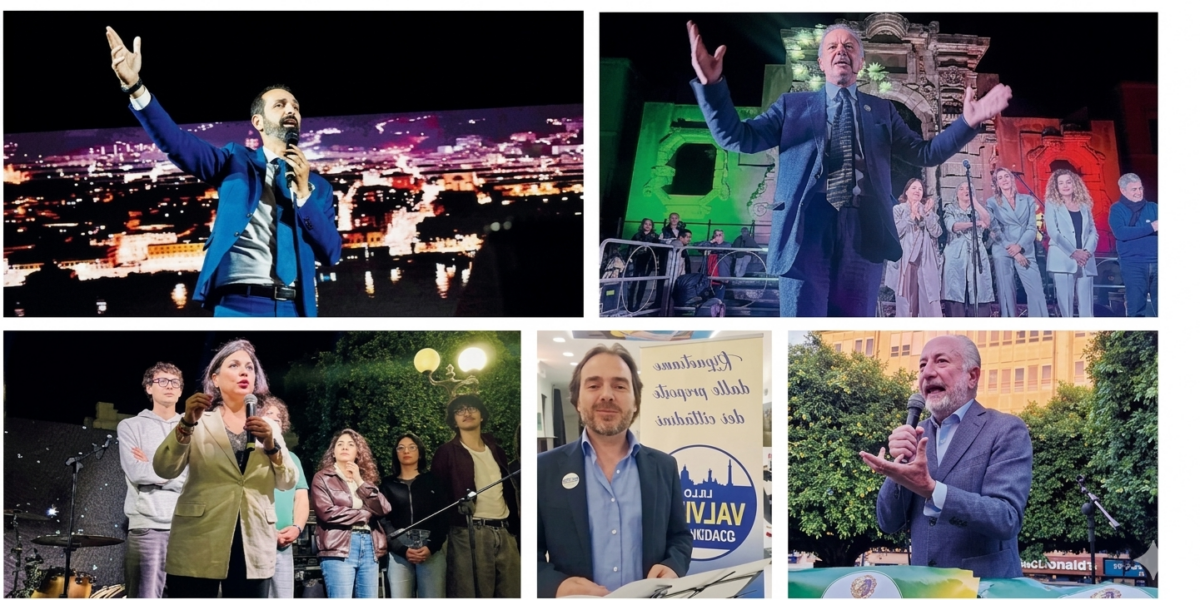
Furthermore, Angelo Giorgianni (who had unsuccessfully presented another appeal, questioning the timing of Basile’s resignation) reiterated this yesterday, alongside Gaetano Sciacca at the closing rally in Piazza Cairoli: «These are distorted elections, we will take all possible legal action». And Sciacca made it clear that «in the event of a runoff I would never go alongside Basile and De Luca». And if Valvieri also chose social media for his latest “appeal to vote”, the others spoke in the square: Antonella Russo in Piazza Lo Sardo (“We are different from the others not only in form, but also in substance, and our position on the Bridge demonstrates this”) with Antonio De Luca and Calogero Leanza, Marcello Scurria in Piazza Casa Pia (“Let’s send home whoever has made this the city of wasted opportunities”) with Matilde Siracusano (“The De Luca model he used Messina”), Nino Germanà, Elvira Amata and the other exponents of the coalition, Federico Basile in Piazza Duomo (“We responded to intellectual dishonesty and will continue to respond with the serenity of the strong, of those who know they have a clear conscience”), obviously with Cateno De Luca (“They forced us into early elections, and in October we will pull the plug on the Schifani government”), who brings the curtain down. At midnight sharp, because then there is silence. Now let the polls speak.