R
recover and relive our history. There are many construction sites and archaeological excavations that the Superintendence of Cultural Heritage has followed and continues to follow under the supervision of Orazio Micali, the superintendent who retired a few days ago. Today we begin a journey in installments that will lead us to tell what is happening between Messina and its province.
And let’s start from the city and the most recent construction site, that of the Seguenza high school, where renovation works are underway on the complex, an excavation which is followed by the archaeologist Maria Ravesi with her colleague Giusi Zavettieri. The discovery dates back to 14 October last, when the cover of a “cappuccina” tomb made of bricks arranged in a double pitch, set on top of a brick box, emerged 30 cm from the pavement. The burial, although partially damaged by the installation of modern buildings, retains part of the mortar sealing. At first glance it seems that there are other burials in the area arranged in line and parallel to the one found. The typological characteristics of the artefact suggest a late Roman dating. The presence of Roman burials in this area – explains Dr. Ravesi -, together with evidence of already known burials and Latin inscriptions found in the nearby blocks, constitutes important data for the topographical knowledge of the ancient city.
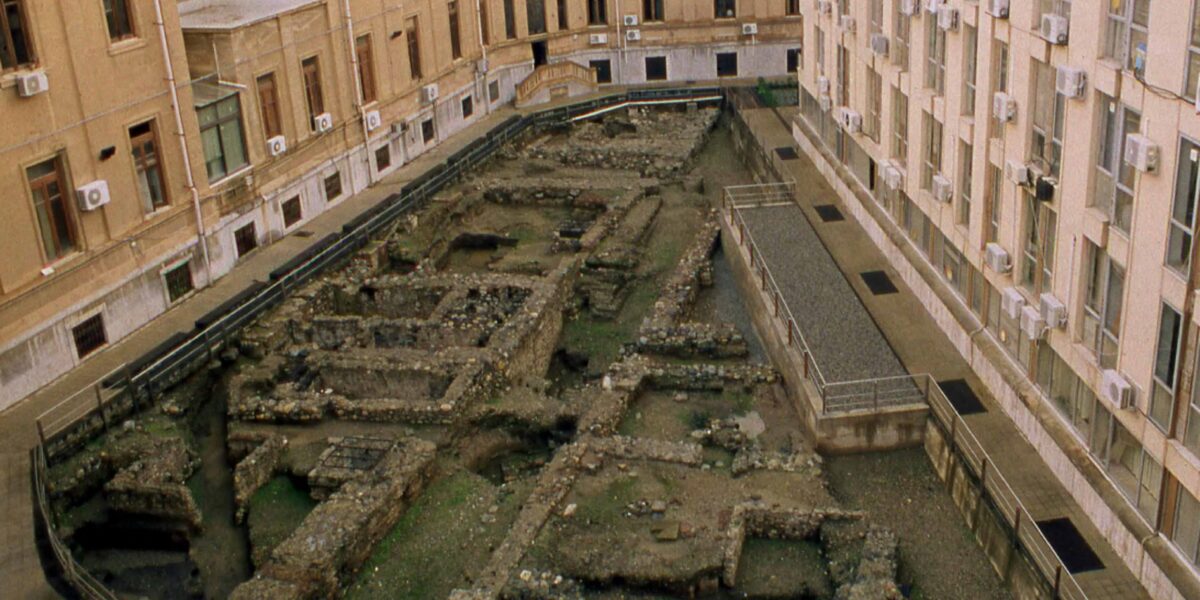
Another strong point of the activity followed by the archaeologist Ravesi in recent months are the Antiquarium and the archaeological area of the Town Hall, recently reopened to the public, with the presence of archaeological evidence from the Roman age already documented in 1916 by Paolo Orsi during the construction of Palazzo Zanca, in an area that must have constituted the public part of ancient Messana. A complex urban palimpsest has emerged: a cryptoporticus and a segment of an auditorium, perhaps an odeon from the Roman-imperial age used for public assemblies, as well as the edge of a residential neighborhood in medieval and modern Messina, in the stretch between Vico della Neve and the intersections of Via della Neve and Via del Forno Scoperto, developed on a layout from the Norman age (we are between the 11th and 12th centuries). The investigations provided very important data for the topography of the city, documenting that the urban layout, known from historical cartography starting from the 16th century, remained unchanged until 1908.
The discovery of a large number of ceramics imported from the East testifies to the importance acquired by Messina as the “Gateway to the East”, whose port was an obligatory naval port of call on international trade routes, as well as the seat of a military arsenal in the Middle Ages and in the following centuries. Continues…