

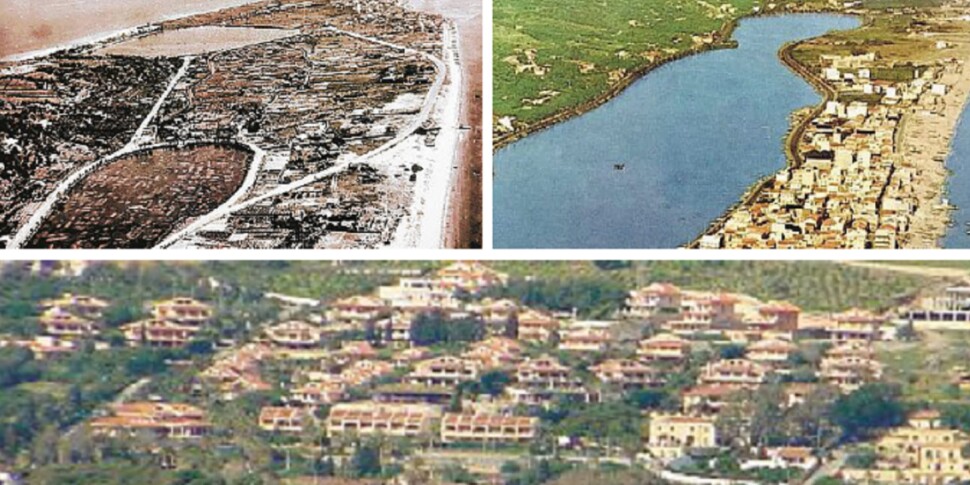
The wide reflection of the university professor of Unime, Giovanni Randazzo, among the most appreciated experts of geological issues in Sicily, published in recent days in the Gazzetta, has provided interesting ideas of debate. And to intervene is Filippo Romano, Messina, already vice -prefect in our city, then prefect of Agrigento and today of Vicenza.
«Messina – writes Romano – suffered a second building bag in the early 2000s. Many of us remember how the North Riviera was before: a row of houses interrupted by some beautiful villas and that’s it; The hills directly behind. In the seventies and first eighties of the last century, the wild construction, as in other cities, had concerned the center and hills immediately behind him. Then, in the other cities of Italy, a renewed environmental and landscape consciousness had allowed the cessation of certain very questionable interventions. In Messina, however, we incredibly experienced a second season of devastation of the territory when elsewhere that new civic consciousness had prevented further. Season culminating in a judicial investigation that revealed a market of soil buildability, ending with criminal convictions.
Now, I don’t want to say (and it could) that at that time there has been no raised shields, because I personally also taken from my work around Italy, I limited myself to getting angry and suffering when I returned to the city and saw new ugliness. However today this draws the strait as an urban and environmental paradise makes me impression. As if we really didn’t see what we have before the eyes. And on the two sides (because things are not better on the calabra, on the contrary). The reflection of prof. Randazzo, who observes how “the territorial devastation that the bridge would bring, forgetting that the realization, in the last fifty years, of a disordered built, exposed to an objective hydraulic-geomorphological danger, has pushed Messina to a very high specific level, among the highest in Italy.
In fact, building without a real overall floor that took into account the cumulation effect, they were struggled, first with a leopard spot and then, continuously, without continuity, the sandy-cyhiaious hills that bordered the historical nucleus of the city; This Dedalo of Palazzi climbs around narrow roads that in their end have an emblematic sign that reads: “Municipal end of the start of the stream”. And would the geomorphological hydraulic danger be the bridge? But it does not end here – the teacher insists -, this same subdivision, with blows of derogations to the PRG, led to the asphyxiation of the Lakes Nature Reserve and to the crowding of what is considered one of the most beautiful beaches in Italy, not for what it has behind, but for the magnificent landscape offered by a horizon that is not lost in the sea “”.
And the same prof. Randazzo, submerged by comments and posts (favorable and contrary to his position), clarifies that “the usefulness of reflection was to create a debate on concrete things, which concern us Messina, all, especially the silent majority. Why not spend the money from the bridge to make the Strait anti-seismic and to arrest the hydraulic-geomorphological instability? Simple, because the money of the bridge, if it did not do, would be lost to do anything else, elsewhere. My reasoning starts, however, by a seismic problem. If a highly esteemed colleague says that there is a real seismic danger, much larger than that estimated by the rules, I worry about me and my fellow citizens. That the bridge falls, who cares, the post-seismic drama would be only ours. Doglioni speaks as a scientist and I understand it, but that politicians relaunches the seismic alarm only for the bridge, cheating on us Messina, I am not very indignant. As for the impact of the works in the area, it is clear that they will have, the essential is to study its systems to minimize it and to have a positive reverberation in its around it “.