

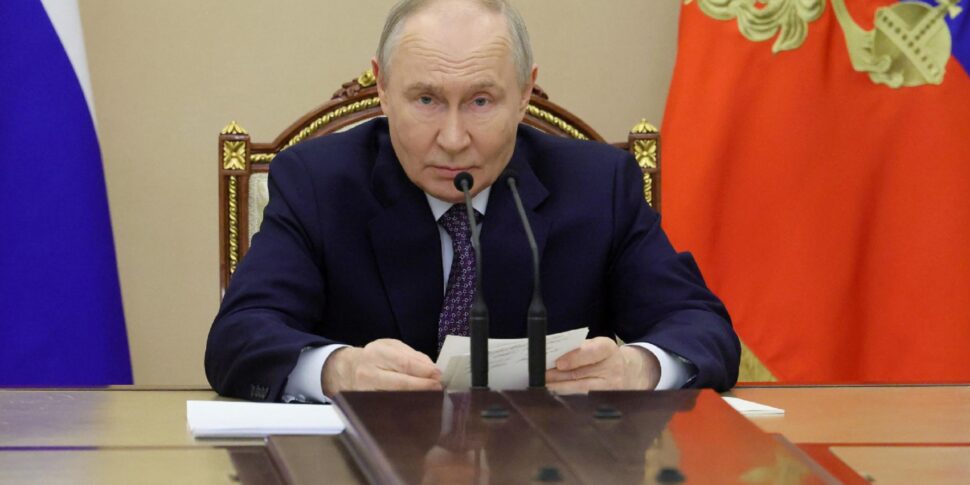
Washington and Moscow are talking to each other again. After a month and a half of silence, Donald Trump and Vladimir Putin had a “one and a half hour” telephone conversation in which they discussed Iran and Ukraine, two increasingly intertwined issues.
The initiative came from the Kremlin and comes a few days after the meeting in St. Petersburg between the Russian president and the Iranian foreign minister, Abbas Araghchi. Putin praised what he called Trump’s “wise decision” to extend the ceasefire which can help “stabilize the situation” in the Middle East and “give negotiations a chance” which currently appear to be at a complete standstill.
The Tsar, relaunching Moscow’s willingness to mediate for peace, then offered Washington ideas and suggestions on how to resolve the Iranian nuclear issue first and foremost, building on his recent face-to-face meeting with Araghchi but also on the message received from the Iranian Supreme Leader, Mojtaba Khamenei, last week.
And in the hours in which tension between Washington and Tehran seems to be rising again, Putin has once again made it clear to the US president that “conducting a ground operation in Iran would be unacceptable and dangerous” and would entail “very serious consequences for the entire international community”.
The tsar then said he was ready for a truce with Kiev on Victory Day, May 9, with Trump insisting that an agreement on Ukraine is close. So far, however, no improvement appears on the horizon on either the Ukrainian or Iranian front.
In the latter case, Trump does not seem to have any intention of giving up: he wants to push Iran into a corner and force it to capitulate. After rejecting a bid to reopen the Strait of Hormuz, the president confirmed he will stick with the blockade for as long as necessary.
And if Tehran does not give in, plans are already ready – reports Axios – for a “short and powerful” wave of attacks in the hope of breaking the deadlock in the negotiations. To show that he is serious, the commander-in-chief published on Truth an image created by artificial intelligence which portrays him holding a machine gun while standing in front of a mountain range devastated by the explosions: the regime must “get its act together”.
Iran’s response was not long in coming, with the threat to soon take “concrete and unprecedented military actions” if the US blockade of Iranian ports is not removed. And with tensions skyrocketing again, oil prices skyrocket, with Brent soaring close to 120 dollars a barrel and the WTI rising by almost 6%. A race which, according to analysts, will continue given that the prospect of a reopening of the Strait is receding.
To mitigate the effects of the high price of crude oil on Americans in view of the mid-term elections, Trump met at the White House with the leaders of the major American oil companies to jointly evaluate ad hoc measures to control petrol prices, which have risen to the highest levels of the year at 4.23 dollars per gallon (about 3.8 litres). Then he defined the Emirates’ exit from OPEC as “fantastic”. Whether Iran will give in and how long it will take is unclear.
And time is not currently on Trump’s side: May 1st marks 60 days since the start of the war, and if the president does not ask Congress for authorization, the Democrats are ready to sue him. During his first congressional hearing since the war began, Pentagon chief Pete Hegseth did not respond to Democrats who pressed him on how long the war will last.
Defending the Epic Fury operation vigorously, Hegseth reported that so far the campaign in Iran has cost 25 billion dollars without however saying what the final bill for taxpayers could be. “How much is it worth ensuring that Iran never obtains a nuclear weapon?” he responded defiantly, branding liberals “anti-American.”