

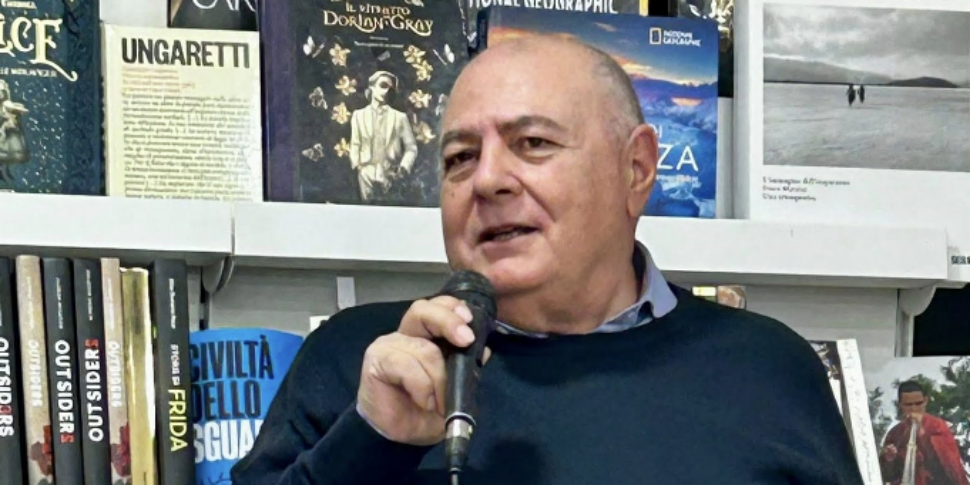
Gioacchino Criaco is back. But his literature, in fact, never stops returning: to that beloved Aspromonte which is the root and inevitable horizon of his stories and his writing. Because it is first and foremost an intimate and collective place, a writing of destinies that starts from far away in time. 18 years after “Black Souls”, the dazzling debut translated into multiple languages and which became a cult film directed by Francesco Munzi in 2014, after seven novels, now other “black souls” crowd the shiny skin of the Great Mother of Aspromonte, and other trajectories, but not luminous, are drawn across the ocean, between Calabria and Toronto, between Calabria and Acapulco. They are traces of nostalgia and hatred – well confused with each other – in a story of fathers and sons badly torn from each other and sent to other nests, like poisoned eggs. It is no coincidence that the protagonist, a totemic animal, is the cuckoo: between the pages of «Dove canta il cuckoo» (Piemme), just released in bookstores, its death song rises, recognizable and disturbing. And a gripping plot unfolds between the Old and New Worlds. Or perhaps between the Old and the Very Old world, that of the shepherds, of the Sacred Mountain and its very rich poverty: a world no less ferocious, from where the seeds of today’s violence come from, the elderly ruthless instigators, the young groups of fire (the boys of the “shooting ball”). The theme is always the same: amazement and violence, love and horror, the family as a minefield and as a refuge, destiny as desire and weight. And the events of the ‘Ndrangheta are the (bloody) surface of much deeper stories. We talked about it with the author.
Your writing starts from Aspromonte, returns to Aspromonte however much you can send it around the world. Do you ever get out of there? You indicate its profound strength but also the evil that lurks within it, which here is precisely the narrator of the old boss Salvo Pizzi: a hypnotic but also disconcerting voice. What is your Aspromonte, your home, the home of your writing? Are we forced to never leave our original place and suffer it, or can we force ourselves to go further?
“I killed a great black Bull eighteen years ago. Black Souls begins like this: the boys of Aspromonte kill the Mountain, they disfigure it, they have to antagonize it in order to abandon it. The mountain is Mana Ghe, the great mother, who, offended, transforms from a fairy into a witch, becoming Lamia, the shadow that chases, an obsession that gives no respite. The boys begin a hellish journey. I abandon them, I go down other paths, other literary paths, paths of light. After eighteen years the obsession returns, more looming than before. The kids are adults, old: in addition to suffering it, they have spread hell around the world. The Cuckoos, today they killed the Bull again, to make them definitive enmity, to condemn without appeal the Mother who did not protect them, who allowed them to be plundered and kidnapped by a West that is worse than them. Obsessions, even narrative ones, are overcome by facing them, you can’t kill them with a shot. It’s a fight, bent over by pain, violence is a mortal sin, sometimes it’s a cry for help.”
The cuckoo is a strong symbol: thief and usurper of nests, with the song of death. It really seems like that black cancer for our South that is the mafias. But the cuckoo is not to blame for his way of being; it is the law of nature. And this is a story of eggs hatching in other people’s nests…
«I have never met a terrible, smelly character like Salvo Pizzi, there is no nastier animal in nature than the cuckoo. Yet I cannot help but pity those who are abandoned by genetic destiny. If the ‘ndrangheta is the excuse, the real theme is abandonment, throwing away a soul right from its conception. Parents who kill their children, very slowly, forcing them to share their evil, to dirty themselves with mortal sin.”
Fathers, sons, orphans: in a world where everything is played on that “who do you belong to?” you mixed the cards and confused the waters (the amnion…). And all in the arms of the Great Mother who also harbors degenerate children (I think of the boss, of his ferocious voice which also expresses admiration and even love for the beauty of “his” place, that Aspromonte which he wants entirely and completely): is there an original innocence, and someone who can claim it or free it, or are we condemned to evil (“I was born a thorn and I didn’t know it, I will be a thorn until the end”)?
«There is a sin, not original, that arises from centuries of betrayal: a sweet, benevolent mother who her children expose to vilification. We didn’t know how to defend our land, we weren’t valiant soldiers. We surrendered to money, we turned our backs on the prospect of peace, we tried to suppress the female universe, we exchanged, at cards, the East for the West, and Mana Ghe became Lamia. Aspromonte is not a peripheral strip of land alive only for well-known news events, it is a parallel universe in which the mountain people have tried to resist standardization. The defense was not adequate. But the resistance is not completely eradicated…”.
The women in the novel are mothers put to the test, forced to make painful choices. Often in your novels women are rays of light, possibilities for turning points. But this is a “patrilineal” story, in which the grace and strength of women can do little, indeed it always ends up playing into the hands of the fathers’ violence.
«In the twenty-year interval between Anime Nere and Il Cuckoo, women tried to build the path to a better perspective, they were a barrier to a drift, especially a moral one. Here the human universe splits. The female one abandons the male side of the union, is convinced that it can no longer be saved. Let’s protect the females and resign ourselves to seeing the males die. The Addolorata lays down the Body of Christ.”
Your boss ridicules the police: his escort who he dupes regularly and who, paradoxically, protects a criminal, is described as stolid and also greedy. All except one, the “good” one who is resistant to flattery and gifts, who in fact must be pushed away (thanks to political “handles”). No hope, from the world of legality and institutions?
«It is a story told from the heart, of stone, of a very bad man. It is the story of black souls who have become souls of stone, from immoral to amoral. But they no longer travel from Locride to Milan, they have built a bridge to all corners of the world, and they know the vices and flaws of the planet. The Black Souls were convinced that they were the wrong ones, they were begging for redemption. The Cuckoos believe they are less worse than those who currently govern the world, who use the same criminal logic as them, on a larger scale. They don’t care about salvation, they want to take everything their violence can produce. Endless hosts of righteous people just don’t see any.”
Someone recently said that there is no Calabrian literature after Alvaro. What do you think?
«There is much more literature today than in Alvaro’s time. There is also a lot of female literature, which from a narrative point of view also feels the need to supplant a male literary perspective which is unable to free itself from the burden of pen fathers who, with respect, should be overcome. There is, in Calabria, literature that, in a charming way, starts from a corner to open up to the world and claims the existence and dignity of a thought, a vision, which is in the South, which has its own, profound themes. I’m not ashamed of being a goatherd, I stopped being ashamed of it since I picked up the pen, I know 100 different names to call, in Aspromonte Greek, the goat, from egà to chimera, and a thousand love phrases to say to my wife. I know the world but I will forever be a son of the Shining Mountain without any regret for the flashes of the West.”