

Add the Gazzetta del Sud as a source
Not a simple cultural billboard, but a collective process. A permanent laboratory of identity, visions and belonging that takes shape on the Calabrian coasts, between Vibo and Pizzo, to restore centrality to the sea as a space of dialogue, memory, hospitality and cultural contamination.
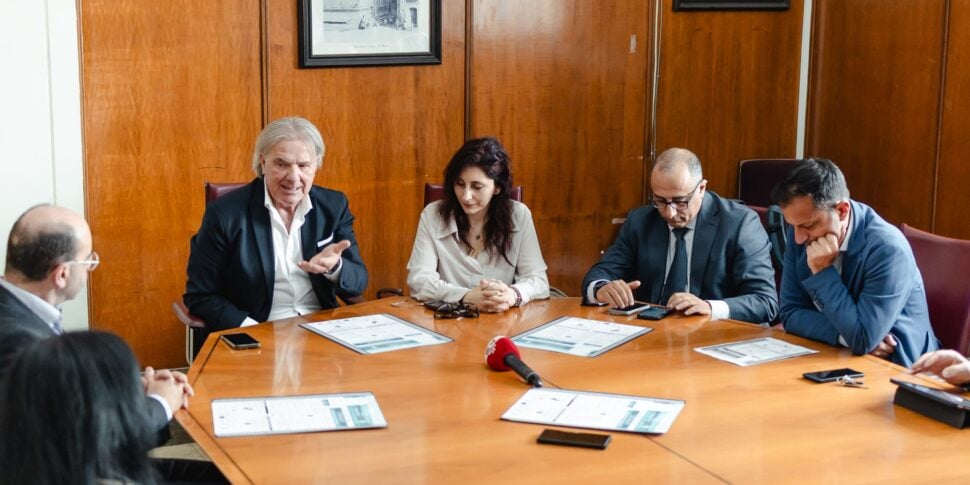
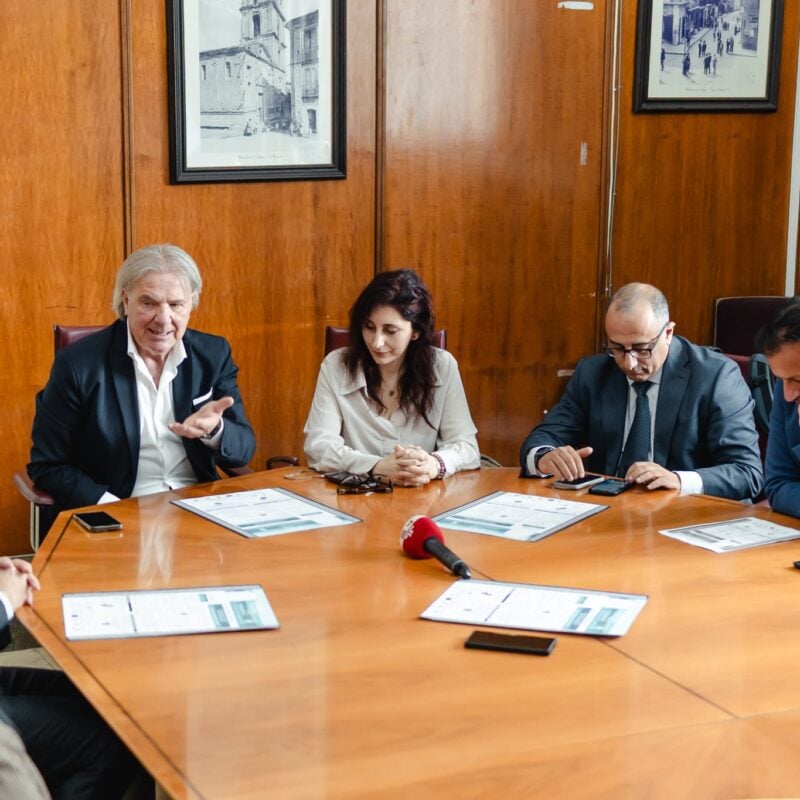
This is the Thàlassa Festival – Stories from the sea, the new cultural project promoted by GALPA MariCal with the artistic direction of Angelica Artemisia Pedatella, presented on Monday 11 May at the Sala Giunta of the Municipality of Vibo Valentia.
Almost forty days of activities, from May to September, build a broad and multidisciplinary calendar that crosses art, pedagogy, environmental sustainability, maritime memory, anthropological research and civic participation. In particular, Thàlassa tries to redefine the story of coastal Calabria.
The press conference to present the project, made possible thanks to the collaboration of the Municipalities of Vibo Valentia and Pizzo, the local schools and a network of Calabrian professionals, was opened by the Councilor for Culture of the Municipality of Vibo Valentia, Stefano Soriano, who highlighted the strategic value of the initiative for the territory:
«Thàlassa represents an important event for coastal communities and for the sea, an integral part of our history. It is a fruitful collaboration between institutions, schools, cultural operators and associations. A project capable of generating participation and vision.”
The president of GALPA MariCal, Antonio Alvaro, focused on the identity and social dimension of the project: «We put our beauties at the center, but above all we intervene on the problems of the coastal areas by acting as a catalyst between institutions, schools and communities. We try to preserve and relaunch the maritime tradition, enhancing water as an identity, cultural and social element. It is an extremely complex project that aims to build new energy and new ideas to make the area increasingly competitive” he declared.
A vision also shared by the director of GALPA MariCal, Fortunato Cozzupoli, who recounted the evolution of the cultural path started in recent years: «This is our most structured project. Our goal is to create opportunities to bring out the territory, transforming critical issues into concrete opportunities, also through community funds. Thàlassa means sea in constant movement: this is exactly how we imagine Calabria, a territory that changes and finds self-awareness. We observe the territory to identify the cure, not because it is sick, but because too often it has thought it was. Today we want to change the narrative, enhancing fishing, the coasts and the human heritage of maritime communities.”
The human and cultural mission of the project was illustrated by the creator and artistic director Angelica Artemisia Pedatella, who summarized Thàlassa in three key words: community, dignity and education. «This project was born from human encounters – he explained – culture must create communities that love each other and want the good of the territory. The sea is inhabited by men and their stories. For this reason, one of the central events will be the documentary dedicated to the maritime communities of Vibo and Pizzo. The more a community is aware of its identity, the more effective the actions of institutions and politics become. Today we don’t just need to recover places or material objects, we need to restore people’s self-esteem, make them feel proud of their land and aware of the value of the Calabrian community.”
Furthermore, he mentioned the rich program of activities dedicated to the new generations: theatrical performances, creative workshops, environmental paths, training meetings and moments of environmental education, in collaboration with Plastic Free, guided by the awareness that training comes from active participation. Details of the events will be available on the festival’s social channels.
There was extensive involvement of schools in the Vibo area, represented by Andrea Mamone, vice-principal of the “Vespucci-Murmura” institute, who underlined the educational value of the initiative: «The very name of our school links us to the seaside community. This project brings to light what we experience every day. If we don’t transfer to the kids the sense of belonging and the awareness of the riches of the territory, we don’t really provide training.” Diego Ventura, teacher of the Liceo Capialbi, however, expressed pride and gratitude for being able to contribute to a cultural project that enhances the identity and memory of the territory, while professor Maria Brindisi of the Don Bosco institute reiterated the importance of involving the little ones in respecting the sea and the environment, a precious asset to be safeguarded.
«The sea builds, accompanies, amplifies. Sometimes it brings with it critical issues, but it remains the place from which to start again” was recalled during the meeting. «Vibo Valentia represents an open door to the Mediterranean, in terms of culture and history. And Thàlassa will not be a simple program destined to run out: it aims to become a permanent cultural brand, capable of growing over time.”