

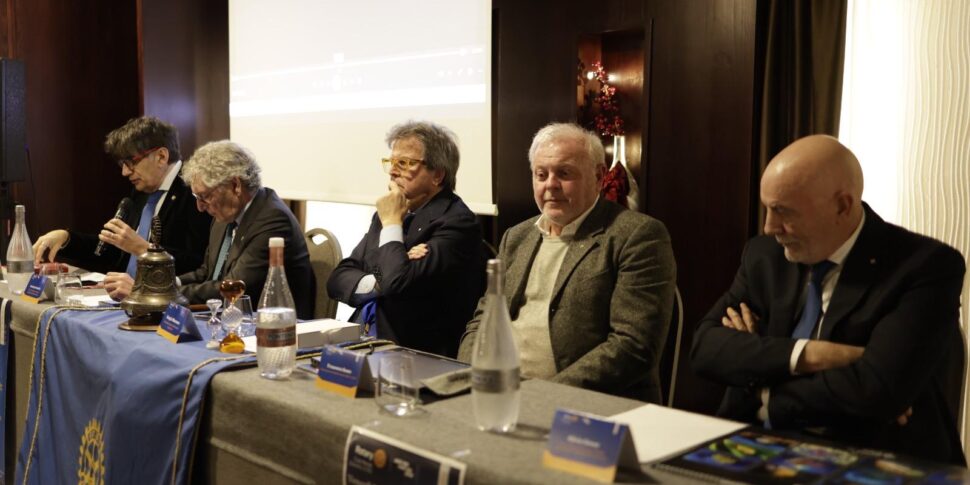
The meeting-debate promoted by the Rotary Club Rende, chaired by Cav. Sergio Mazzucadedicated to the state of health of the Calabrian sea. Approximately 70 participants were present. Prof. reported. Silvio Grecoprofessor of Ecology and vice-president of the “Anton Dohrn” Zoological Station of Naples, and Dr. Francesco Sessomultiple world champion of underwater photography and Unical researcher (DIAM). He moderated Carlo Tansi.
Microplastics and anthropic pressure
Greek recalled alarming data: in the Calabrian sea there are estimated to be over 139,000 fragments of floating plastic per km², with more than 97% concentrated on the seabed, where thousands of fragments per m² are reached. Persistent pollution that enters the food chain and also poses risks to human health.
On the wastewater front, it was highlighted that, in addition to the purifiers, illegal discharges and lack of collection are a burden: in many coastal areas contaminants and nutrients persist despite interventions on the plants.
Changing balances
Among the signs of imbalance: increase in salinity in the Ionian Sea and growth of non-native species, combined effects of human pressure and climate change. The land-sea connection is central: what happens in the river basins is directly reflected in the sea.
The images from the bottom
Sex accompanied the public with an underwater photographic report on biodiversity, warming, acidification and pollution of the seabed. A sea that is still resilient, but increasingly fragile and less biodiverse.
A commitment that looks to the summer
The Rende Rotary Club has chosen to bring the debate forward to the summer season to promote a comparison based on data and expertise. For Calabria the sea is economy, tourism and identity: protecting it means choosing a sustainable and responsible development model.