

It will be Tosca, the fifth of the twelve operas composed by Giacomo Puccini, which will fill the noble space of the “Francesco Cilea” Municipal Theater of Reggio Calabria on Friday 27th at 9pm (the premiere) and Sunday 29th at 5.30pm, with the emotional power of the music of great opera.
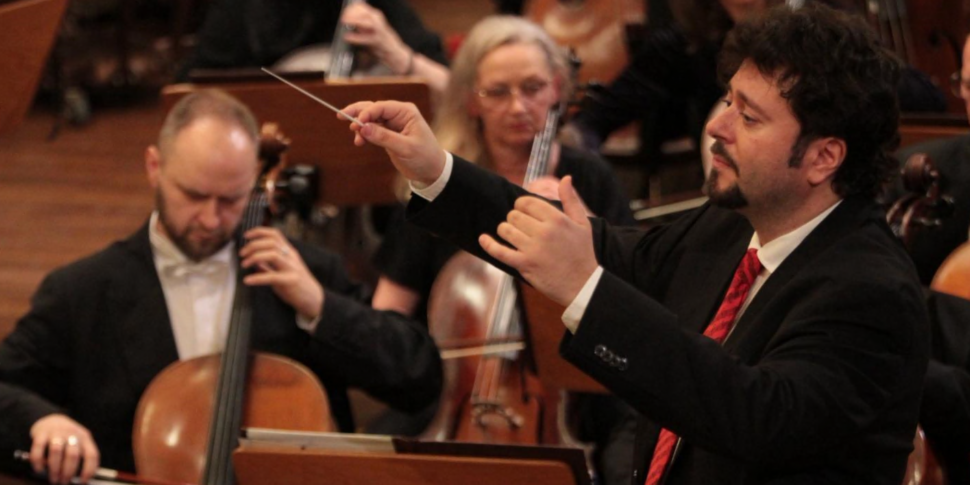
But what is considered the most dramatic work of the Puccini repertoire, and certainly among the most performed, since its debut at the Teatro Costanzi in Rome on 14 January 1900, is also Tosca by the Calabrian maestro Filippo Arlia, concertmaster and orchestra director, who brings the joy of music a little further into the world, without leaving his Calabria where, under his care, the State Conservatory of Music is alive and vital “Tchaikovsky” of Nocera Terinese, a national artistic and musical training institution directed by maestro Valentina Currenti, an excellence that helps music and talents grow. And which supports Polis Cultura, a cooperative society for cultural and social promotion, in its new path in the opera sector which now, after “Pagliacci” by Ruggero Leoncavallo, is competing with the staging of “Tosca”, directed by Mario De Carlo, with the grandeur of this opera.
The Puccinian melodrama in three acts, whose libretto by Giuseppe Giacosa and Luigi Illica derives from “La Tosca” by Victorien Sardou of 1887, written for the great Sarah Bernhardt, performed at the Teatro dei Filodrammatici in Milan in 1889 and which had greatly impressed Puccini, immediately became popular, full of twists and turns, thanks to its intense and rich orchestration and the famous three arias, one for every act (Hidden harmony, I lived by art, And the stars shone).
At the centre, a story of passion and death, with the famous singer Floria Tosca and her lover, the painter Mario Cavaradossi, opposed to the ambiguous Baron Scarpia, head of the papal police; and in the background the beauty of Rome in 1800, at the time of the Papal State, with the iconic paintings that immortalize the basilica of Sant’Andrea della Valle, the Palazzo Farnese and the terrace of Castel Sant’Angelo.
The historical-philological research for Arlia and De Carlo’s “Tosca” is accurate, with the historical stage set designed by Nicola Benois, one of the greatest protagonists of the 20th century theater, reconstructed by Scenografie Sormani of Milan, and illuminated by Light Designer, with careful attention to detail: from the costume sketches designed by director De Carlo and created by the Bianchi theater tailoring shop in Milan to the props, including Gina’s jewels Cigna, famous Tosca and Turandot from the early 1900s, and today owned by De Carlo.
While making thoughts sing in an entirely human drama among the evils of history, there will be an exceptional cast, from the Romanian soprano Bianca Margean (Tosca) to the tenor Samuele Simoncini (Cavaradossi), from the Mexican baritone Carlos Almaguer in the role of Scarpia to the baritone Francesco Villella (the Bonapartist friend of Cavaradossi who escaped from the prison of Castel Sant’Angelo).
Accompanying them are the Calabria Philharmonic Orchestra of the Tchaikovsky Conservatory, the International Opera Choir directed by Giovanni Mirabile and the “Note celesti” children’s choir directed by maestro Alessandro Bagnato.

Find out more in the digital edition
To read everything, buy the newspaper
or download the digital version.