

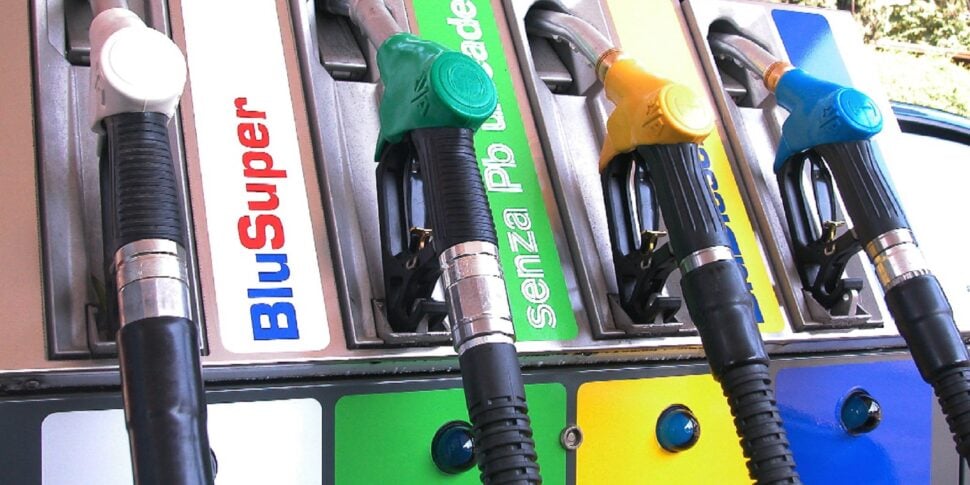
The ministerial decree is being published which extends the current cut in excise duties on fuel expiring today until May 22nd. The Mef communicates this.
Meanwhile, after the energy shock following the outbreak of war in the Persian Gulf, the CGIA Research Office estimates the bill that Italian families and businesses will have to bear this year to cope with the increases in electricity, gas and fuel prices at almost 29 billion euros. The heaviest “slice” concerns petrol and diesel, with 13.6 billion in extra costs (+20.4% compared to 2015), followed by 10.2 billion for electricity (+12.9%) and 5 billion for gas (+14.6%). An economic impact that risks putting both the most economically vulnerable families and businesses with little liquidity in great difficulty.
RINCARI BOOM IN LOMBARDY, EMILIA ROMAGNA AND VENETO
At a territorial level, the families and businesses most affected will be those of Lombardy, where energy price increases will weigh 5.4 billion euros, equal to an increase of 15.1 percent compared to 2025. Followed by Emilia-Romagna with +3 billion (+16.1 percent) and Veneto with +2.9 billion (+15.8 percent). The ones paying the heaviest bill will therefore be the most populous regions with the greatest concentration of manufacturing and commercial activities, i.e. the main production engines of the country.
FUEL EXPENSES + 13.6 BILLION
With the pump prices of petrol and diesel both hovering around 2 euros per liter in the last week, the CGIA Research Office estimates for 2026 an overall increase at a national level of around 13.6 billion euros compared to 2025, with an increase of 20.4 percent. At a territorial level, the most marked increases in percentage terms would be recorded in Basilicata, where the increase would reach 21.6% (+118 million euros). Campania and Puglia follow, both with an increase of 21.3%: in the first case the economic impact is estimated at around 1 billion euros, in the second at 837 million. A picture that highlights how the trend in fuel prices continues to produce significant and uneven effects across the national territory, with particularly significant repercussions for families and businesses in the Southern regions.
THE EU MUST INTERVENE
The European Union appears to be the great absentee on this issue. The CGIA has no doubts: Brussels must allow – and coordinate – the interventions of the Member States to mitigate the increases in fuel and energy prices for three fundamental reasons: macroeconomic stability, social cohesion and functioning of the internal market. First, energy shocks represent typical supply-side shocks, with very regressive effects.
The increase in fuel, electricity and gas prices is rapidly transmitted to production costs and final prices, fueling cost inflation and squeezing real incomes. In the absence of intervention, restrictive monetary policy becomes the only response tool, with disproportionate recessive effects. Allowing states to sterilize these increases (through tax cuts, targeted subsidies or compensation mechanisms) helps break the inflationary transmission without depressing aggregate demand. Secondly, there is a question of equity and social stability.
Energy is an essential good and its impact on income is greater for low- and medium-income families. Without corrective measures, inequalities and the risk of energy poverty will widen, with political consequences as well. A coordinated intervention at EU level avoids fragmented and uneven responses that could accentuate divergences between countries. Finally, the internal market requires fair conditions of competition. Marked differences in energy prices, due to divergent national fiscal capacities, distort competitiveness between European companies. A European framework that authorizes and harmonizes national interventions (including through flexibility on state aid and fiscal rules) reduces these distortions and preserves a level playing field.
THE DESIRED INTERVENTIONS
In addition to a structural measure that, over 5-7 years, accelerates the energy transition by reducing dependence on fossil fuels, it is necessary to temporarily suspend the Stability Pact, allowing member countries to contain the cost of energy without impacting the deficit/GDP ratio. At the same time, as already happened in 2022-2023, Brussels should authorize the VAT cut on bills, introduce a cap on the price of gas to stem its volatility and provide a solidarity contribution on the extra profits of the large energy multinationals which are currently making appalling profits. Finally, a much discussed measure remains on the table, but never actually implemented: the decoupling between the price of gas and electricity, deemed increasingly necessary to reduce the market’s exposure to such violent shocks. Without EU “coverage”, the measures to sterilize the increases in energy products taken by individual states appear to be not very incisive and completely insufficient.
The estimates on the increases in petrol and diesel were calculated starting from the 2025 consumption data from the Ministry of the Environment and Energy Security (Mase) and on the average prices of the 2 fuels in 2025 (petrol 1.733 euros per liter and diesel 1.653 euros per litre); the same consumption levels as 2025 and average prices of 1,950 euros for petrol and 2,050 euros for diesel were assumed for 2026.
Those on electricity and gas, however, were created starting from data on 2024 consumption by companies (assumed constant for the years 2025-2026) and the related average prices from Eurostat; as regards non-domestic users, in reference to electricity consumption, non-domestic users were considered net of the sectors permeated by the PA (public administration/defence, health/social assistance, education, public lighting); for gas consumption, industrial users (excluding electricity generation), commerce and services (excluding public service) were considered, all net of self-consumption.
The costs for the year 2025 are the result of an estimate that takes into account the trend in the average annual prices of the electricity and gas market – energy exchange sourced by Gestore Mercati Energetici (Gme) – equal to 116 euros per MWh for electricity and 39 euros per MWh for gas; the cost forecasts for the year 2026 were calculated considering an average price (for the entire year) of electricity of 150 euros per MWh and 50 for gas, respecting the proportion of 3 to 1 between the two prices as occurred on average in the three-year period 2023-2025. Please note that the increase in energy costs for businesses will be less than proportional to the change in prices on the energy exchange as the increase in the price of raw materials does not impact the entire overall cost of the bill (which also includes marketing costs, transmission costs, charges, taxes, margins, etc.).
And therefore compared to a hypothesis of an increase in the price of raw materials of 29% (estimated for 2026 compared to 2025), the respective growth in costs for businesses and families will be lower. The data on household expenditure on electricity were calculated with the same methodologies but for 2024 (base year for the estimate of the two-year period 2025-2026) the monthly expenditure of Istat was taken into account which on an annual basis and multiplied by the number of Italian families returns amounts similar to the calculation using Eurostat price data.
A 10.2 BILLION INCREASE FOR ELECTRICITY BILLS
For the current year, increases in electricity bills are expected to reach 10.2 billion euros (+12.9%). In absolute terms, the most significant burden should hit Lombardy with 2.2 billion. Veneto follows with just over a billion and Emilia Romagna with 967 million euros.
AN EXTRA COST OF 5 BILLION FOR GAS
An additional national withdrawal of 5 billion is expected from gas bills (+14.6% compared to 2025). Again in absolute terms, Lombardy should suffer an additional cost of 1.2 billion. Emilia Romagna always follows with +710 million and Veneto with +611 million.
“BILL DECREE” AND EXCISE TAX CUT ARE INSUFFICIENT
While recognizing the timeliness with which the Meloni Government intervened to mitigate the increases in electricity, gas, petrol and diesel prices, the measures introduced so far appear insufficient to sterilize the effects of the ongoing energy shock. The so-called “Bill Decree”, definitively approved in recent weeks by Parliament, contains a series of measures designed to reduce the impact of high energy costs on families and businesses.
This measure is worth around 5 billion euros: an important figure, certainly, but inadequate to slow down the long wave of bill increases that will hit Italians in the coming months. Among the main innovations we highlight: an extraordinary contribution of up to 115 euros on the electricity bill for the most economically fragile families, which is added to the already existing social bonus; expansion of the number of beneficiaries thanks to higher ISEE thresholds; reduction of general system charges that weigh on companies’ bills; extension of protections for vulnerable users in the transition to the free energy market; new rules against aggressive telemarketing in the energy sector; measures to encourage long-term energy contracts and stabilize the price energy; interventions to support renewables, district heating and more efficient energy systems.
Furthermore, for businesses, the decree aims above all to reduce the burden of energy costs and contain price volatility, with particular attention to energy-intensive companies and SMEs. On the fuel front, since March 19th the Government has introduced a cut in excise duties on both petrol and diesel by 20 cents per litre. Since May 2, the contraction has fallen to 5 cents per liter for petrol, while it has remained the same for diesel.