

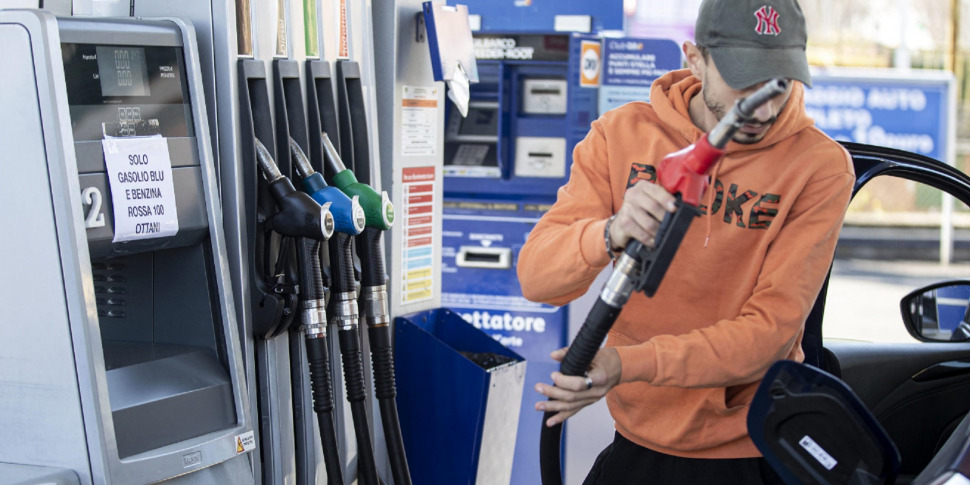
The government has extended the temporary cut in excise duties on fuel launched on March 18: 25 cents per liter on petrol and diesel, 12 cents per kilo on LPG. The new decree, approved this morning in the Council of Ministers, will be in force until May 1st, to try to stem the increase in the cost of energy goods linked to the conflict in the Middle East which has lasted for almost forty days. The text also contains targeted measures on agricultural companies, to which the 20% tax credit initially foreseen only for fishing companies is extended.
The intervention will be financed with 500 million euros, of which 200 coming from the extra VAT revenue accrued in recent weeks and 300 through the ETS mechanism, the European system for trading CO2 emission quotas.
«We are extending the reduction in excise duties already in place, which would expire on Easter Monday, until May 1st», announces the Minister of Economy Giancarlo Giorgetti. The burden of these measures is around 500 million, «for 200 million there is the self-coverage that derives from the increase in VAT revenue, for 300 million there are resources that have been recovered from Ets C02, which had not yet been used, taking care not to touch those originally intended for the relief of energy guzzlers».
Giorgetti: “Complicated situation, the duration of the war will have consequences on monetary and fiscal policy”
The owner of the Mef looks at the next possible moves: «The decree law buffers the situation until May 1st, then geopolitical events which obviously do not depend on us will suggest possible other types of interventions with respect to a situation which is objectively very complicated in every respect, including the economic one».
Giorgetti is also looking to the game in Brussels for the possible easing of the spending constraints imposed by the stability pact, given the continuation of the conflict well beyond the times initially imagined by analysts, with evident long-lasting economic repercussions. «It is clear that reflection at a European level, if the situation does not change, will be inevitable. I expressed this reflection of mine already at the beginning of the conflict, I reiterated it to the Eurogroup, I will do so in any international forum in which I participate, because this is the reality. The issue of the duration of the conflict will unfortunately produce consequences on both the monetary and fiscal policies of the countries that suffer these effects.”
Meanwhile today, Mimit notes, based on the latest data collected by the Observatory on fuel prices, the average price in self-service mode along the national road network is equal to 1.763/l for petrol and 2.096/l for diesel. On the motorway network, however, the average self-service price is 1.822/l for petrol and 2.137/l for diesel.
Consumer associations remain skeptical about the full effectiveness of the measure passed by the Council of Ministers. For Codacons the decree “is not sufficient to bring fuel prices back to acceptable levels”. While for the National Consumers Union it is an «inadequate cut for diesel. It is serious not to have raised the discount on diesel, which today on the road network sells on average for exactly 2.1 euros per litre”.