

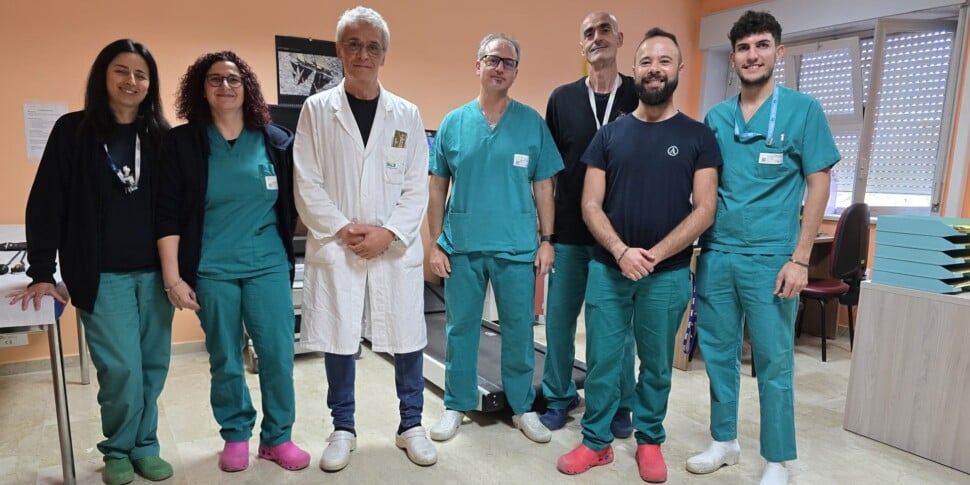
In the context of the care activity provided by the Hemodynamics UOSD of the Patti PO, directed by Dr. Salvatore Garibaldi, in 2019 an outpatient service was established, managed solely by the CUP, with the aim of contributing to the management of cardiovascular diseases in the vast Tyrrhenian-Nebroid area relating to the Hemodynamics of Patti, made up of approximately 280,000 inhabitants.
With the growth in the demand for care and being able to improve the care offering, both quantitatively and qualitatively, in 2023 Patti’s Hemodynamics opened two other types of clinics, both planned and encouraged by the Region: the integrated management clinic, dedicated to heart failure, and the internal specialist clinic. By virtue of the expansion of outpatient activity, over time, the ability to enroll patients suffering from heart disease has also grown, to assist people already undergoing interventional cardiology procedures, as well as to prescribe multiple drugs subject to regional therapeutic plans, for which Patti Hemodynamics is qualified: drugs for the treatment of heart failure, dyslipidemia, ischemic heart disease and for the prevention of thromboembolic disease. With the activation of the new clinics, innovative instrumental methods were also introduced, highly sensitive and specific, which have significantly strengthened the diagnostic skills of the Center (level II diagnostics). In practice, currently, within the outpatient activity of Patti’s Hemodynamics, the following specialist services are performed: 1) level 1 services (cardiological examination with electrocardiogram, color Doppler echocardiography, treadmill exercise test); 2) level II services (echocardiography with contrast medium and transcranial ultrasound for the search for pathological communications within the heart, stress echocardiography for the study of ischemic heart disease, trans-esophageal echocardiography for the study of valvular anomalies and to support percutaneous structural cardiac interventions). Recently, having available adequate professional and instrumental resources, the Patti Hemodynamics clinics have been enriched with a new method with very high sensitivity and diagnostic specificity (level III diagnostics), namely Cardiac Magnetic Resonance performed in basal conditions for the study of tissue, structural and valvular cardiac pathologies, with the aim, by the end of the year, of extending its application to the search for ischemic heart disease during pharmacological stress (a technique present only in few centers in Southern Italy). In a context of valid collaboration between Patti’s Hemodynamics and the Radiodiagnostics Divisions of the PP.OO of Milazzo and Barcellona PG, directed by Dr. Simone Fogliani and Dr. Francesca Torre, the method in question is actually carried out by a multidisciplinary team of Cardiologists and Radiologists at the Nuclear Magnetic Resonance Center of the PO of Barcellona PG, whose equipment is equipped with a cardiac module. Regarding the implementation of this relevant multidisciplinary diagnostic activity, serving the vast Tyrrhenian-Nebroid territory, it is right to express gratitude to the top management of the ASP Messina, first and foremost to the General Director Dr. Giuseppe Cuccì, for the essential technical support and trust placed. Thanks for the organizational contribution also goes to the Medical Director of the Barcelona PO, Dr. Giuseppe Cocuzza.
The Patti Hemodynamics clinic represents an efficient public service, of the highest technological and diagnostic level, well organized to accept and treat patients with serious cardiac pathologies and to follow them in a scheduled manner even after any interventional procedures. Finally, with this article, we take the opportunity to highlight the generous donation, made by the Aretè di Patti Committee, of the furnishings of an additional room assigned to the Hemodynamics clinic of “Baron Romeo” due to the increase in volumes of activity. A gesture that fits into the logic of gratitude and active participation of citizens, a concrete act of civic solidarity aimed at improving the quality and efficiency of the service, with positive effects on the health and well-being of many people.