

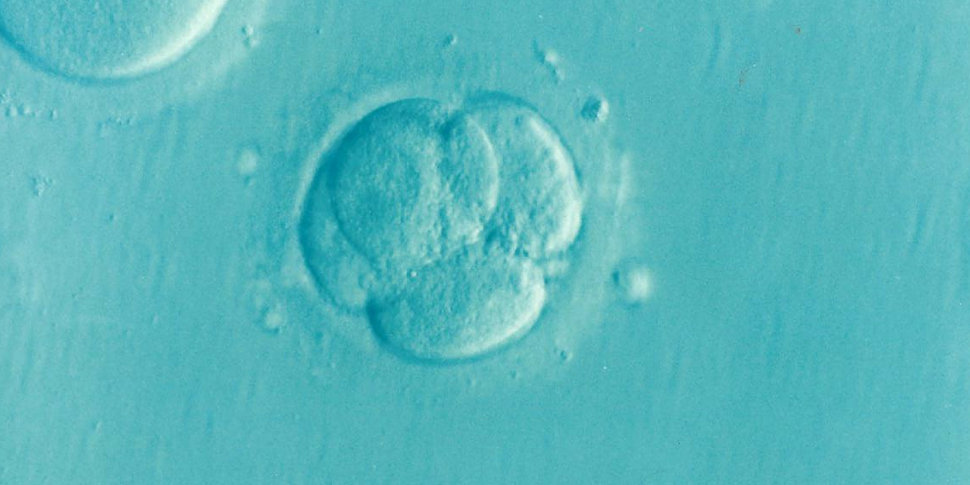
Shocking discovery in Europe on the frontier of assisted fertilization and the business that supports the fight against infertility. The sperm of a single donor afflicted by a serious genetic mutation, such as to enormously increase the risk of cancer, was in fact marketed in Denmark by a well-known sperm bank, contributing over the years to the birth of almost 200 children around the Old Continent: some of whom had meanwhile been struck by the disease and had already died tragically as children.
EBU survey: genetic mutation disrupts assisted reproduction
The revelation is the result of a laborious investigation conducted under the umbrella of the European Broadcasting Union’s Investigative Journalism Network by 14 television stations from various countries, including the British BBC.
The results, also obtained thanks to the use of laws that require the sharing of confidential information of public interest, have highlighted how the recorded number of babies conceived with the sperm of this anonymous “donor” – apparently unaware of the tare that concerned him – has reached at least 197 over time, during the 17 years in which it remained available in the freezers.
The donor paid by Denmark’s European Sperm Bank
Donor so to speak, moreover, given that the protagonist of the story was identified as a former student who, starting from 2005, had been regularly paid by Denmark’s European Sperm Bank (in full compliance with the regulations in force in the Scandinavian country).
The BBC cites experts according to whom the genetic mutation in question, if transmitted, is destined to ensure that only a minority of affected newborns can hope not to contract oncological diseases during their lifetime.
Contaminated sperm: the European countries affected (excluding Italy)
He also specifies that the Danish bank did not sell the contaminated sperm to any clinic across the Channel, as it does not have commercial relations in the United Kingdom; while from a map published to accompany the story it is clear that Italy also seems to have been spared, unlike Germany, Ireland, Iceland, Belgium, Poland, Spain, various Balkan countries or Georgia.
The admission of the Danish sperm bank and good faith
The managers of Denmark’s European Sperm Bank for their part ended up admitting what happened, while still claiming their own good faith and that of the “infector” himself: “unaware” at the time of the transaction.
At the same time they expressed “deep compassion” towards the families affected by the nightmare, not without highlighting how the samples sold abroad may have been used to generate “too many children” in some countries.
The crucial TP53 gene and Li-Fraumeni syndrome
The mutation was identified late, in the wake of alarms that emerged only afterwards, since the donor had been found healthy in all standard tests. The damaged gene is called TP53, crucial for the prevention of the formation of tumor cells: the man’s DNA was immune to it, but not that contained in 20% of his sperm.
While the babies to whom it has been transmitted find it all over their bodies, affected by a condition – Li Fraumeni syndrome – which statistically leads to a 90% increase in the chances of being diagnosed with some form of childhood cancer (or breast cancer in adulthood for females).
Experts alarmed: traces of the TP53 gene in many children
The case raised the alarm of doctors from the European Society of Human Genetics, who were able to examine 67 children involved this year after the diffusion of the first suspicious data, finding traces of the feared variant of the TP53 gene in 23 of them. Edwige Kasper, an oncology geneticist at the hospital in Rouen, France, confirmed to journalists that she had viewed the medical records of “many children who developed two different types of cancer, some of whom already died at an early age.”
The French mother’s comment: “Not acceptable”
“I don’t have it against the unaware donor,” commented a French mother – indicated by the BBC with a cover name, Céline – who was put on alert for having used a risky sample 14 years ago, in a Belgian clinic: “But it’s not acceptable that I was injected with something that wasn’t clean, that wasn’t safe, that was dangerous.”