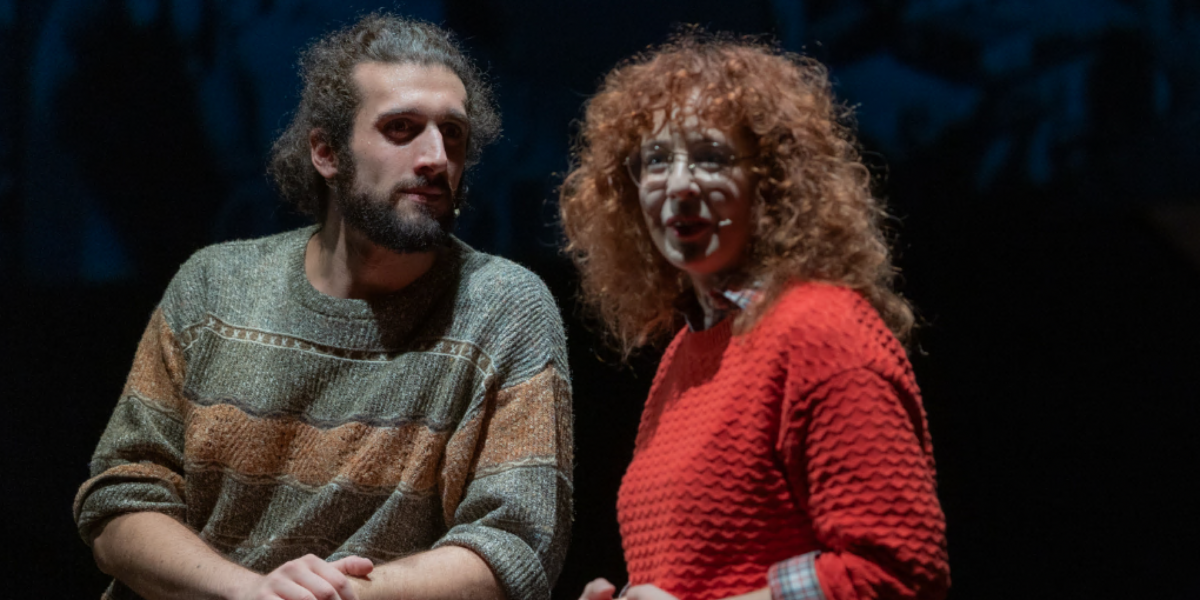
There are times when even love can become a political issue. In which, choosing how to live means taking a position, chasing an idea of the future and dealing with the contradictions of the world. It is in the Messina of the Seventies, marked by ideological tensions, militancy and the aspirations of a generation convinced of being able to change things, that “The Years in Reverse” took shape, a show based on the novel of the same name by the Messina writer Nadia Terranova. After last year’s move to the Sala Sinopoli, the performance arrived at the Sala Grande del Vittorio Emanuele (last performance today at 5.30 pm), confirming the strength of a proposal that finds in the theater a privileged tool for rereading the past.
At the center, the bond between Aurora and Giovanni; around, the buzz of a restless Italy, where community commitment coexists with individual desires. The public sphere thus breaks into the private sphere, conditioning choices and upsetting the balance. The director is Antonino Lo Presti, who prefers subtraction by entrusting only two interpreters, Davide Colnaghi and Isabella Giacobbe, with the task of restoring the complexity of the narrative material. The scene is bare, entrusted to two lecterns and a few other elements, while in the background a sort of collage of photographs and newspapers evokes the climate of that troubled season. An essential election, which focuses attention on bodies, voices, gestures and silences. The actors support the story with a scenic understanding that dresses the protagonists’ torments with naturalness and tension; Marcello Conti’s music, on the piano, remains measured, amplifying the emotional impact without overlapping the words.
The play deserves the credit of not reducing the Seventies to a repertoire of slogans and nostalgia, but of highlighting its conflicts through the lives of those who lived through them. And it is here that “The Years in Reverse” finds its relevance. Because, beyond historical differences, the question remains open as to how much utopias can resist the impact of reality and we wonder what price the great transformations impose on people. Between broken dreams and the desire for freedom, the universal drama of those who try to reconcile what they believe in with what life grants them resurfaces. And History, once again, shows its most human face: that of the existences it touches and, inevitably, changes.