

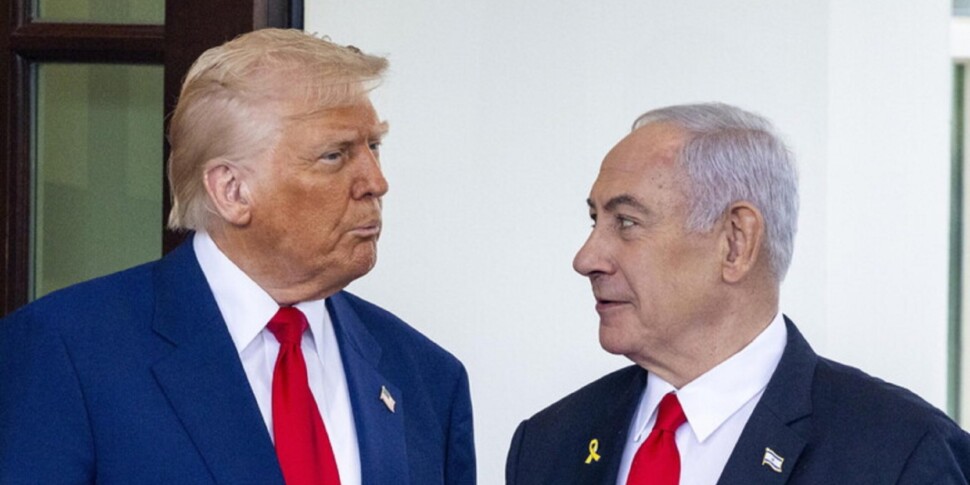
He had already asked this in his speech to the Knesset a month ago, on the occasion of the agreement between Israel and Hamas for the ceasefire, but informally, off the cuff, as if it were a spur-of-the-moment intuition. Now Donald Trump has taken an official step, putting down his request to Israeli President Isaac Herzog on White House letterhead: “I ask you to pardon Benyamin Netanyahu, a formidable and decisive prime minister in times of war and who now leads Israel in times of peace.” The American ally, who in turn had to face the judges in what he called “a witch hunt”, rushes to the rescue of Bibi, as he calls him in the letter sent to Jerusalem, defining the trial against the prime minister as “unjustified and political”. “Now that we have achieved unprecedented success and are bringing Hamas under control, let us end this legal war once and for all,” Trump urged. The response, calm but decisive, from the Israeli head of state was not long in coming: while reiterating “the utmost esteem for President Trump” and “appreciation for his unwavering support for Israel”, Herzog underlined how “anyone who requests a presidential pardon must submit a formal request according to the established procedures”.
The Israeli president did not go into the merits of the judicial proceedings: Netanyahu has been on trial since 2020 on charges of corruption, fraud and breach of trust, in three separate cases. But Trump’s letter sparked enthusiasm or, on the contrary, controversy among supporters and opponents of the prime minister. The hawkish Minister for National Security, Ben Gvir, urged Herzog to listen to the tycoon: “Pardon is the right and urgent thing to do,” he tweeted. “We needed Trump to highlight the absurdity of a Kafkaesque trial,” said his Foreign Affairs colleague, Gideon Sàar. While opposition leader Yair Lapid wanted to remind us that “Israeli law establishes the recognition of one’s guilt and the expression of remorse for one’s actions as the first requirement for pardon.” The Israeli media also underline that the president can grant it only after the conviction, and only in very rare cases of national interest even during the proceedings. And in any case always at the request of the person concerned or a close family member: sources from the prime minister’s office reported to Channel 13 last month that his wife Sara was moving in this direction.
Meanwhile, the hearings continue slowly, often postponed due to the war in Gaza where the truce seems to be barely holding on: the army continues air and artillery attacks against everything it deems “a threat”, while the fate of the 150 Hamas militiamen trapped in the Rafah tunnels has not been resolved. Furthermore, under the ceasefire agreement, the Palestinian faction has yet to return four bodies of slain hostages. Meanwhile, Israel has “permanently” reopened the Zikim crossing for the entry of humanitarian aid towards the north of the Strip, the hardest hit in the conflict, just as the one in the south of Kerem Shalom remains open.
But now there are fears that another conflict could also explode in the West Bank, where settler attacks against Palestinians multiplied in October with the olive harvest. The latest serious episode occurred on Tuesday evening, when dozens of hooded civilians set fire to an agricultural business near Tulkarem and injured four Palestinians, before also attacking the soldiers who intervened. The Chief of Staff, Eyal Zamir, assured that the IDF “will not tolerate a criminal minority” that has “crossed the red lines” by staining those who respect the law. And he promised to “act with severity until justice is done”.