

Six days for a new peace signed by Donald Trump. Six days to understand if Volodymyr Zelensky will accept a plan that smells of surrender or will decide to move forward, without his strongest ally. Six days to understand if Europe will be able to get back on its feet, after yet another Stars and Stripes trap.
The American peace plan for Ukraine may become a watershed in the history of the West. Certainly, after the whirlwind of indiscretions, everything seems clearer.
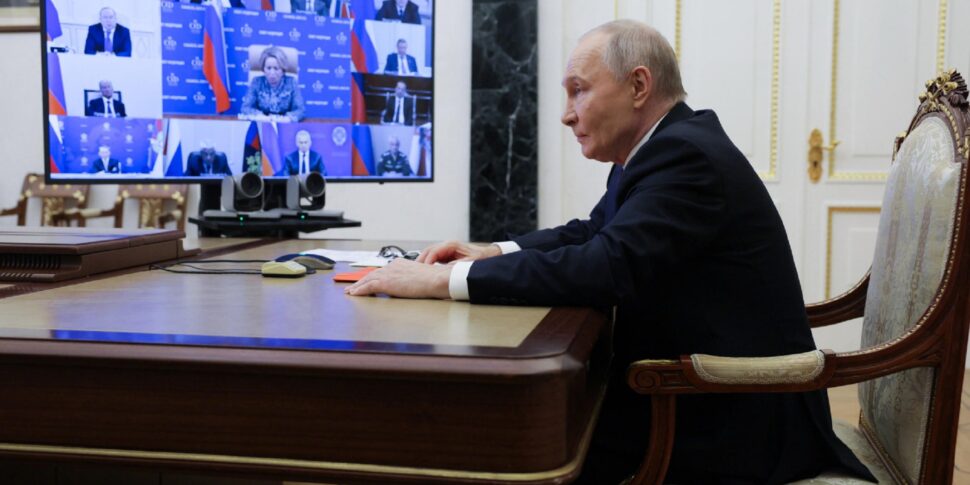
The American president effectively confirmed the plan by ordering Kiev to accept it by Thursday, Thanksgiving Day. From Moscow, Vladimir Putin demonstrated that Moscow is also in the control room of the 28-point draft.
«The plan can serve as a basis for putting an end to the conflict», announced the Tsar, then announcing his threat: “If Kiev does not accept it, we will conquer more Ukrainian territory».
Trump’s move must be framed in a very specific strategy, which starts from the summit with Putin in Anchorage, passes through the failed rendezvous in Budapest and rests its foundations on a channel, the one with the Kremlin, which has always remained open.
On the third attempt the tycoon changed tactics. He did not initially expose himself personally, aiming for a new meeting with Putin. He worked behind the scenes, sending forward the trusted Steve Witkoff, the man of the crucial preparatory phase of peace for Gaza.
The previews filtered through the various international media did the rest, drawing up a plan on which Trump expressed himself clearly only later.
“Thursday is the right day to accept it,” he declared on Fox News, cutting short the large cessions of territories requested from Kiev in exchange for peace: “He will probably lose them anyway, in a short period of time.”
On one point Washington has remained in line with the EU and Kiev, that of sanctions on Russia. “I don’t intend to revoke them,” Trump assured. The American president did not hear Zelensky. His deputy, Jd Vance, spoke on his behalf with the Ukrainian president.
Shortly after, the leader of Kiev, speaking to the Ukrainians, described without frills the dramatic crossroads before him: bow to Trump’s ultimatum or move forward without US weapons. “We are in one of the most difficult moments in our history. Ukraine – he said – could now find itself faced with a very difficult choice.”
The chess game over Kiev, in these hours, has four geographical references: in addition to the two parties in conflict and in Washington there is also Johannesburg. It is here, in fact, that the G20 meets. And it is here that European leaders will prepare their counter-plan to balance the American one. Trump’s move once again stunned Europe. The shock became tangible as details of the plan emerged.
Comments collected across multiple diplomatic sources vary. They range from “it seems like it was written by a Russian” to “shameful”, from “nauseating” to “it’s practically Squid Game”. There are those who use very harsh tones. “We are faced with a rape that we even have to pay for.”
But there are also those who open a line of credit. “It’s a pragmatic project.” Within the 27, as always, the nuances are different. The President of the Commission Ursula von der Leyen and the President of the European Council Antonio Costa, according to what ANSA has learned, will “test” the other partners on the sidelines of the G20 to understand the “mood” of the rest of the world on the plan.
The “survey” will help to develop the next steps. Which do not rule out a possible trip to Washington by the “core” Volenterosi group along the lines of what happened last August.
Those who took the initiative before landing in South Africa were Emmanuel Macron, Keir Starmer, and Friederich Merz. The three called Zelensky, underlining the need for a “dignified peace” and to “preserve the interests of the EU and Kiev”. None of them completely rejected Trump’s plan, welcoming the US’s “efforts” by promoting the points relating to “security guarantees” for Kiev.
But, for the three European leaders, the front line must be “a starting point”, and not the end point of the negotiation. “We will consider every proposal realistic,” Zelensky echoed. The German chancellery at this time also works as a bridgeman.
He’s the one who heard Trump. And it was he who spoke to Giorgia Meloni, who was left out of the call with Zelensky. Finally, in the evening, it was von der Leyen and Costa who called the Ukrainian president. “We are at your side, nothing is decided without Kiev”, they underlined. The risk is that, more than a promise, it is just the embrace of the allies in the darkest hour.