

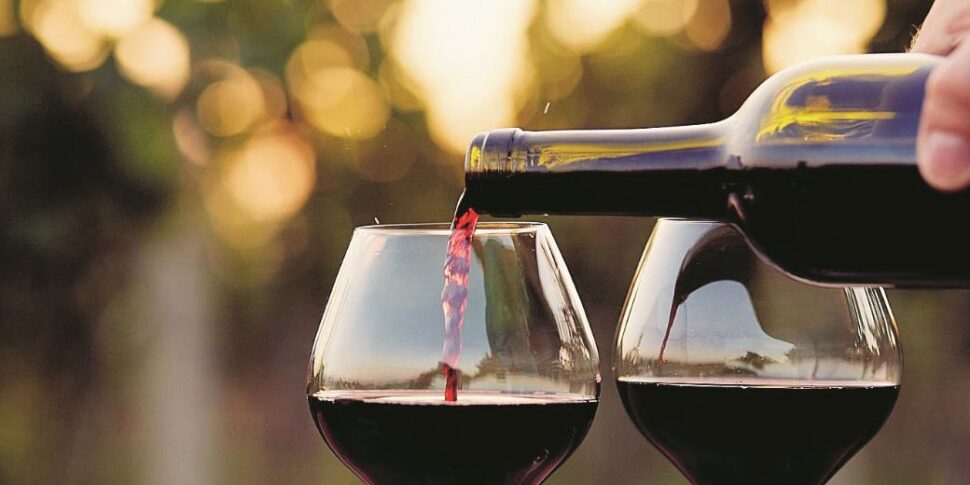
It’s not just the pleasure of accompanying a good lunch. Wine is increasingly one of the main cogs in the Sicilian economic machine and not only due to the contribution given to the development of the agri-food sector. In the year of Sicily being the European region of gastronomy, wine is consolidated as a pillar of tourism, as well as a founding element of the history and culture of a land. Aware of the prestige of the wine sector, the Gazzetta del Sud inaugurates for its readers the series of Guides with Vini di Sicilia 2026, signed by Slow Wine and edited by Francesco Abate and Giancarlo Gariglio, with the editorial coordination of Olivia Reviglio. The volume will be distributed from today (8 December) on newsstands together with the Gazzetta del Sud, at the price of 3.50 euros in addition to the cost of the newspaper.
It is an invitation to listen to the voice of the vineyards. Wine, after all, is the story of the many souls of the Island, it is the history that flows, from the large cellars that have set the example to the small family businesses, where each harvest is an ancient rite that is renewed. Here what really matters is quality, care, taste. The Sicilian Wines Guide 2026 captures and returns, page after page, the experience and commitment of 141 wineries, the characteristics of the countryside, the cultivation techniques. It makes you feel flavors and aromas and provides the keys to choosing one bottle over another.
In the guide, the editors Francesco Abate and Giancarlo Gariglio explain with numbers the economic weight of Sicilian wine: «In the center of the Mediterranean, approximately 100,000 hectares of vines of which two thirds are white grapes; 33,000 hectares, first region, for organic vineyard area; 60 varieties, 23 Dop and 7 Igt, 13 Wine Routes; first region for hours of sunshine and geological and pedoclimatic variability”.
The wines tasted are 80% from the three vintages ranging from 2024 to 2022, more or less equally divided between whites and reds. Three very different harvests, with just as many nuances resulting from the great diversity of territories into which the region can be divided. Quite recurrent elements are the critical issues to which the vineyards of the entire island have been subjected. «With the necessary exceptions – underline the two curators -, the Catarratto (the vine alone makes up about a third of the vineyard area), and the mountain ones in particular as well as the Grillo (about 10% of the regional surface), and especially those on the coast, have maintained a varietal and saline line; the Insolia showed a sip that was not at all banal. Among the reds, Frappato and Cerasuolo di Vittoria are on the rise, appearing less “raw” and more incisive than in recent years. A step forward for the Nero d’Avola from the south-eastern horn: juicy, full of determination and dynamic, a real pleasure for the palate. The Etna Rosso (due to the 2023 harvest) was subdued, unlike the Etna Bianco, which instead exhibited juice, momentum and depth of drinkability. Good results also for Syrah and Perricone, the latter however still looking for a shared identity. The wines of Pantelleria and the Aeolian Islands are exciting, they are intense, salty and full of light and warmth, as well as Passiti, Perpetui, Altogrado and Marsala, wines that are a little forgotten but can touch the soul.” In this guide, Abate and Gariglio conclude, space is also given to various small producers “who represent real generative moments of a sometimes asphyxiated and repetitive viticulture”.