

Cross-attacks continue between the US-Israel and Tehran, which also targets civilian targets such as American universities in the Gulf in response to similar attacks on Iranian universities. US and Israeli missile strikes hit the Iranian port city of Bandar Pol, near the Strait of Hormuz, killing five people and wounding four. Six more people have died following an Israeli-American attack in a residential area of the Iranian village of Osmavandan, with five houses completely destroyed and 22 severely damaged.
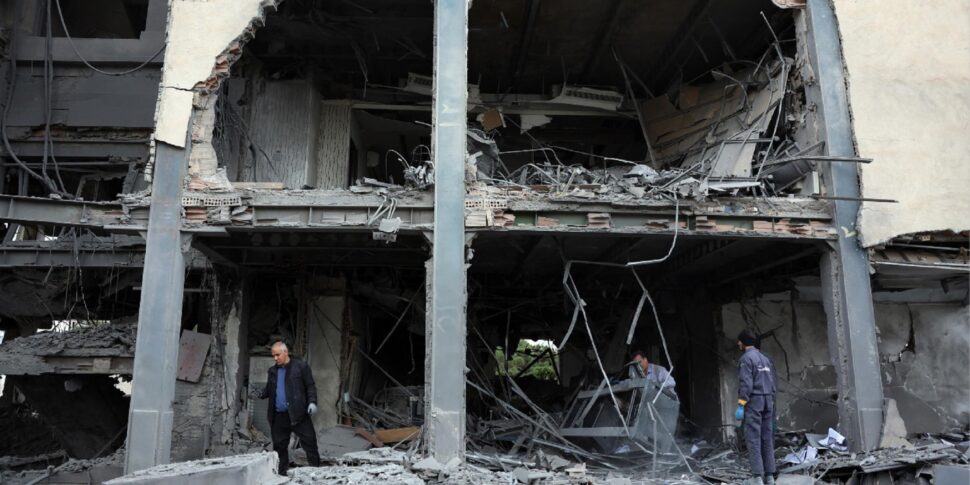
In Tehran, however, a missile launched by a drone hit “a commercial and civil building” which houses the editorial office of the Qatari news channel Al Araby, interrupting live broadcasts and injuring ten people. A raid condemned by the broadcaster, according to which “endangering journalists or targeting them is contrary to international law and the Geneva Conventions”.
The University of Technology in the city of Isfahan was targeted for the second time, after Saturday’s attacks which also involved the University of Science and Technology of Tehran. Objectives that led the Pasdaran to launch an ultimatum, threatening to strike American and Israeli universities in the Middle East if the United States government does not condemn the bombing of the Iranian ones “with an official statement by midday on Monday 30 March”.
The American University of Beirut has already announced that classes will be held online for the next two days, “as an extreme precaution.” Iran also threatened again to strike the aircraft carrier USS Abraham Lincoln with surface-to-sea missiles if it comes within range, at a time when Tehran fears an imminent land invasion.
In this case, the spokesman for the Central Command of Khatamolanbia (Iran’s operational command), Ebrahim Zolfaghari, warned, “American commanders and soldiers would become easy prey for the sharks of the Persian Gulf”. Iranian forces “are waiting for the arrival of American troops on the territory to set them on fire and punish their regional partners forever”, echoed the speaker of the Iranian parliament Mohammad Bagher Ghalibaf.
Meanwhile, the invisible Iranian supreme leader, Ayatollah Mojtaba Khamenei, returns to life thanking the Iraqi people and the religious leadership for their support for Iran “in the face of aggression”, with a message delivered by the ambassador of the Islamic Republic in Baghdad to Sheikh Hammam Hamoudi, head of the Supreme Islamic Council of Iraq. Israel, for its part, completed another wave of attacks on Tehran and other areas of Iran, hitting temporary command centers and production and storage sites of ballistic missiles, air defense systems and regime observation posts. But sirens continue to sound in Tel Aviv, Jerusalem and other Israeli cities over Iranian missile launches.
Debris from intercepted rockets fell in Haifa. The industrial area of Neot Hovav was also hit, 12 km from Beersheba, the main city in southern Israel. Adama, a company producing active ingredients and plant protection products, is on fire. Hezbollah also launches missiles from Lebanon, where Israeli Prime Minister Benjamin Netanyahu has ordered the army to “further expand” the already existing security zone.
The US-allied Gulf countries remain under the pressure of Tehran’s attacks: from the Emirates, forced to use their air defense system against Iranian missiles and drones, to Bahrain, which has banned night navigation in its territorial waters in response to “Iranian aggression”. Finally, in Kuwait, ten soldiers were injured in an attack by the Pasdaran against a military camp.