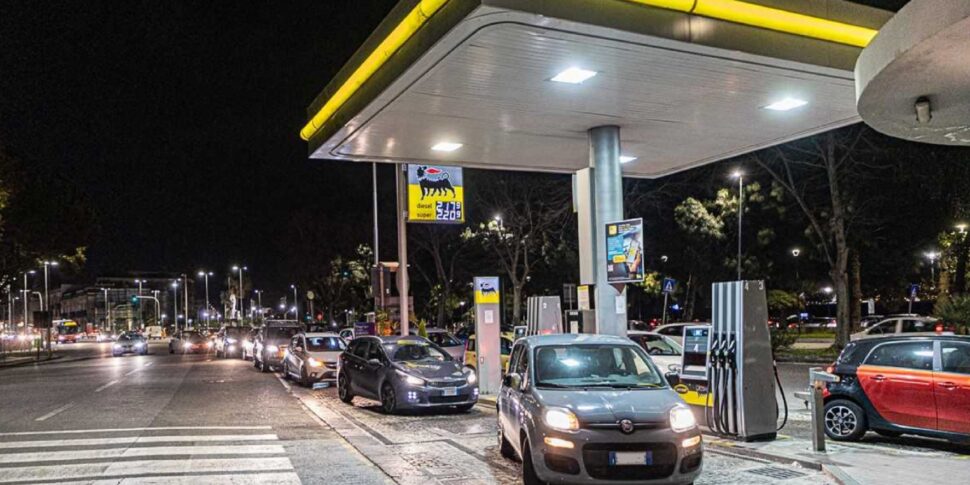
Anger and suffering mark the time line behind the scenes of a life that has, unfortunately, become complicated. The epicenter of the planetary crisis is in a Middle East reduced to flames, between interrupted routes and markets in alarm. But the rubble is evident here too, every day, in shopping receipts and at petrol stations. The war quickly changed the characteristics of the economy, dragging with it a chain of price increases which found its point of fall in fuel. The oil that is struggling to arrive and the Strait of Hormuz that is contracting become multipliers of social unease.
March inflation data describes a region that runs in prices above the national average. Red alert figures in Calabria with Cosenza and Reggio leading the ranking of the Italian capitals with the most significant growth in the cost of living. If Italy stops at 1.7%, Cosenza grows up to 3.1%, marking the highest figure in the country. And Reggio Calabria takes the seat of honor with 2.9%. Catanzaro remains in the bubble with an index that stops at 1.4%. And it’s not just about percentages that rise and fall within restless diagrams. The high cost of living is the narrative of a pressure that is placed on family budgets already compressed by one of the lowest disposable incomes in the country, just over 16 thousand euros a year, according to the Tagliacarne Institute.
Fuel is the engine of this social suffering. It can be found in transport, where increases exceed the national average: +3.2% in Cosenza and Reggio. But above all in the use of personal transport, which rises to 4.4% in Cosenza and 4.8% in Reggio, a sign of increasingly expensive mobility in territories where the alternative is practically non-existent.
The full article is available in the print and digital editions