

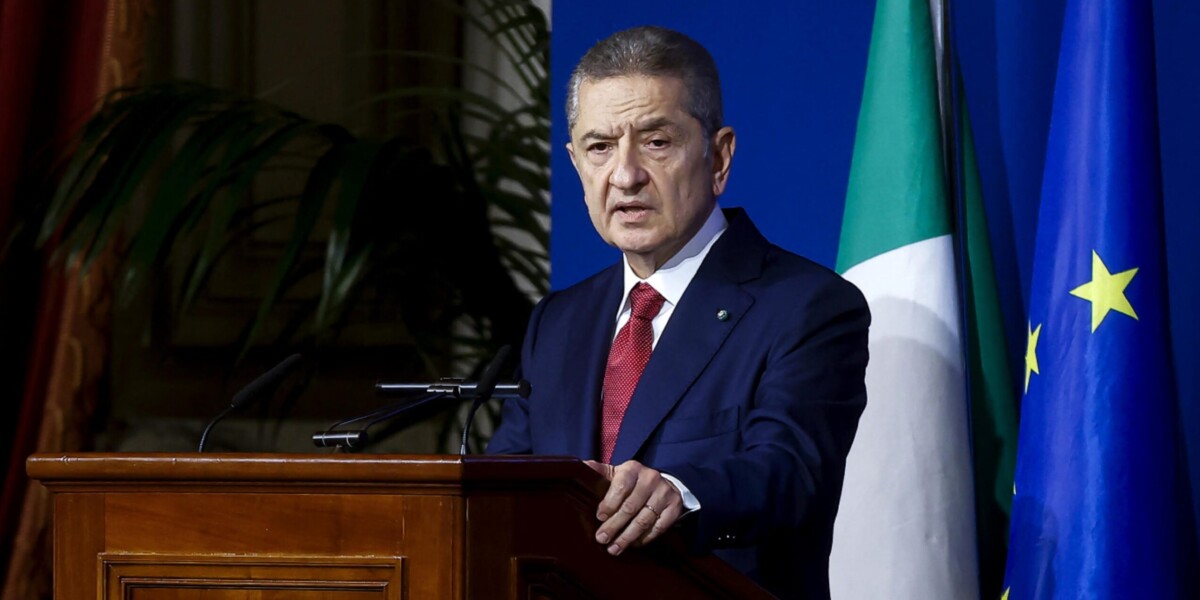
There are many topics addressed by Governor Fabio Panetta in the annual report, ranging from AI to young people, to work, to public debt, to Europe and the energy crisis. Panetta invites us to encourage work opportunities for young people, rewarding merit, to focus on the development of artificial intelligence and training and to increase productivity. And he underlines the need to “cut the burden of public debt to free up resources for development and social services”. As for monetary policy, he believes that it must recalibrate interest rate policy and not bind itself to a predetermined path.
To accompany the growth of the country system, the governor notes, Italy can count on a solid banking system where, however, growth is not uniform, with the profitability of the smaller institutions remaining limited. A dynamic credit panorama in which there is room for new aggregations, which also transcend national borders.
Solid banks, space for mergers
Panetta underlines that Italian banks face the current difficult economic situation «from a position of solidity. Profitability and degree of capitalization are high; the ratio between market value and book value is among the highest in Europe.” Progress, however, «is not uniform. The major banks – he specifies – have recorded very positive results, thanks to the recovery of the interest margin, the growth of commissions and the containment of costs in relation to revenues. For the less significant banks, profitability remains more limited and operational efficiency weaker.”
In this scenario, according to Panetta, the high capital endowment of the system «opens space for new aggregations, national and cross-border. Both can contribute to strengthening the European banking market.” In Italy, «well-designed operations – he analyzes – can bring the structure of the credit market closer to that of the other main European countries, make banks more competitive and encourage greater diversification of revenues. Their value will depend on the ability to create more solid and efficient intermediaries.”
Reduce debt to free up funds for growth
Panetta focuses on the age-old problem of the high Italian public debt, which exceeds 3 thousand billion. The governor asks us to “decisively take a path that allows us to permanently reduce the burden of public debt, freeing up resources for social spending and development. It is necessary to facilitate the technological leap of companies, strengthen human capital, direct savings towards productive investments, accompany workers in the changes that the new economy will require”.
EU measures, speed in implementation is needed
Panetta notes that international instability «leaves no room for hesitation or partial responses. The effectiveness of the reforms will depend on Europe’s ability to overcome the obstacles that too often slow down their implementation: long negotiations, downward compromises, uneven national applications, resources announced but not mobilised. The priorities have been identified; the task now is to transform them into timely decisions, adequate funding and concrete results. It is on this ability to execute that the credibility of European action is measured.”
ECB timely on rates
The ECB “will act with the timeliness and measure necessary to prevent the energy shock from turning into persistent inflation” but the prospective framework could “require a recalibration of the monetary policy orientation, to counter the risk of persistent inflationary tensions”. On interest rates: «It remains essential not to be tied to a predetermined path. Defending price stability means preserving the purchasing power of families, business confidence and the conditions for lasting growth.”
Creating opportunities for young people: «It is the civil task of this time»
«The ultimate criterion of success will be the ability to offer opportunities and a future to young people. A country that innovates must know how to enhance skills, reward merit, retain and attract talent, allow everyone to contribute according to their abilities. It is a question of efficiency and justice together”, notes Panetta.
«Creating the conditions so that the new generations – he continues – can realize their aspirations and contribute to the progress of the country is not just an economic responsibility: it is the civil task of this time. Only in this way will Italy be able to navigate an increasingly fragmented world without suffering its divisions, and transform the technological transition into a season of freedom, work and confidence in the future.”
Artificial intelligence, growth lever for the economy
The potential contribution of AI to the growth of the Italian economy “is significant”, estimates Panetta. «Labour productivity – he underlines – could increase by 0.2 percentage points per year in a scenario of slow adoption, and by over 1 point in the case of rapid and pervasive diffusion. In the most favorable scenario, these gains could more than offset the decline in potential output due to the contraction of the working-age population.”
The governor, however, warns against the risk of uneven development in the sector. However, widespread adoption of artificial intelligence “faces significant obstacles, especially among smaller companies.” It involves “high initial costs and requires technical and management skills to identify the most suitable solutions, reorganize processes, manage legal risks and protect data confidentiality”. The fragmentation of demand «in turn discourages the creation of specialized suppliers. To overcome these obstacles, public intervention can be decisive, especially in the initial stages.”