

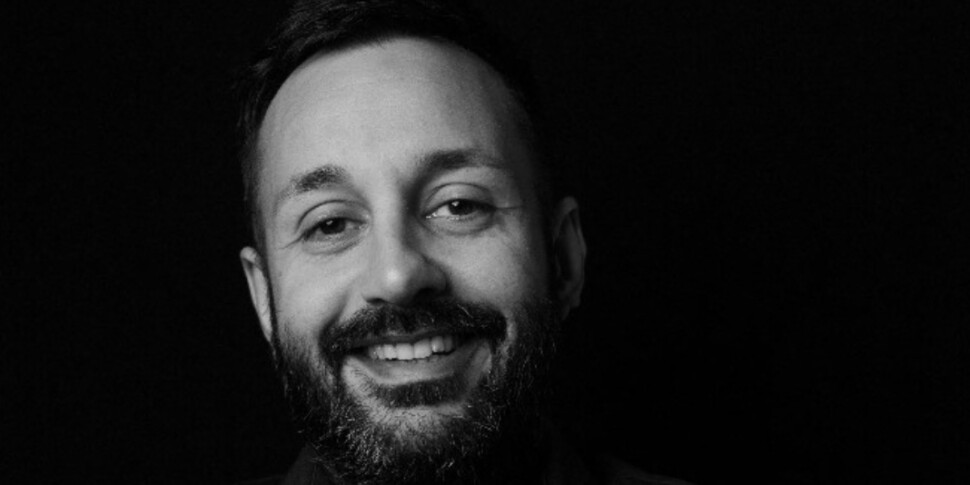
He’s back with a fantastic story aimed at little ones but which will also enchant much older readers. The writer from Messina (of Librizzi) Mattia Corrente, born in 1987, who made his debut with a much appreciated and translated novel for adults, «La fuga di Anna» (Sellerio, 2022), and with «Cronache dell’Ade» (Salani, 2024), Premio Selezione Bancarellino 2025, had reached the hearts of many young people by telling the story of the descent into Hades of little Michele, accompanied by the strange and amazing seagull Gabo, today he will be the protagonist at the Bologna Children’s Book Fair (3pm, Melodia room) with another epic adventure: in «The restorer of worlds» (with illustrations by Chiara Di Vivona, Salani), just released in bookstores, the anti-hero hero is Cosimo, who makes us think so much of Calvino and his baron in the rampant, also for his relationship with the quick Viola, a schoolmate who passes him the most forbidden novels at home his, from his accountant mother whose surname is Fantasia but hates fantasy and its most “dangerous” manifestations: stories. And this time the “enemy” is the fearsome “Unstitching Machine” which erases pages, endings and characters of the most beautiful novels. Who can save the imagination, if not Cosimo (and Mattia)? We talked about it with the author.
This time too, your unbridled… imagination invents a new venture within some of the most beloved narrative worlds of all time, from Alice in Wonderland to Peter Pan to Gulliver. Is imagination a treasure to be continually defended? Who threatens it, and what can we do?
«Are you asking me that I think I’m a fantastic creature? I have been making fantasies since I was five years old and I stayed on the shoreline, at sunset, waiting for the counter fish to dart from the sea to pull the sun cord (I thought it was a gigantic lamp…). And I still do it. Never as a child was I right and I didn’t have enough patience… Fantasy is a work of deflagration of the obvious, of reality as it is, of the possible that you can only see if you imagine more. Change never happens by dealing with what already exists, but with what you can invent. Who threatens her? We, this serial species of adults who think but no longer imagine. We fear fantasy because it takes us away from reality and we believe it is an act of unforgivable irresponsibility. And instead we should use our imagination to train ourselves to refuse stasis. Here’s a medical prescription: find a quiet place and imagine yourself wherever you want, with whoever you want, in a world that works best for you. Then open your eyes again, go out into the world and do you know how many things will no longer work for you? To recognize what doesn’t suit you, you have to fantasize. Trial…”.
Your protagonists are once again special kids, who have to face problems in their relationships with their peers and even within their family: Cosimo is a bit like Michele, and he too meets a fantastic animal, the canuzzo Toto. The “redemption of the losers”, who instead possess the strength of their imagination and their hearts, is a much loved and necessary theme…
«It is the redemption of the invisible. We all are a little bit like that. The gaze of others has the power to make us disappear, if we don’t stamp our feet and make noise. Cosimo and Michele are lucky: they don’t exist. I really envy him this thing of moving within the pages. Literature protects characters from the clichés of real life, it does so with the freedom of invention that does not condemn errors, does not force them into pre-established directions and does not have social stereotypes at their heels. But don’t you get bored of just being one version of yourself out there? Always with the Pirandellian story that others give you an identity and you have to accept it as well. No no, literature is an identity journey where you are multitude and freedom is not a tax, but a birthright. This is why we always recognize ourselves in books. The characters are versions of us that are denied to us in life. As for redeeming the losers: I live with two dachshunds and they are my fantasy pets. Too long, too short, too out of place. Only they don’t know it and they practice the fantasy of believing they are Godzillas capable of trampling skyscrapers under their paws…”.
In the acknowledgments you write something very beautiful, addressing your young readers (even if you know well that you also have others): «Always disobey us». What is transgression, how can it save the goat and cabbages of the imagination?
«Do you know that I can never imagine the age of my readers? When I write a story, I feel like I’m addressing a universe of people without even a birth certificate, let alone an age. Of course, the target exists, but I really boycott it. Disobedience is an alternative to everything that is considered normal because it is officially legitimized by this monster called “everyone”. Do you know the very dangerous statement “It’s always been done this way”? If one then gets used to it, he confuses common sense with blind obedience. Borders scare me because they anesthetize rebellion and you get used to pre-packaged points of view. Stereotypes come from there. Fantasy is a form of disobedience that cannot punish anyone, do you understand? They haven’t yet made a law that would cause trouble if you imagine the change for yourself and others. It is a sort of literary Carbonari that uses books and readers as its arm to counter and limit the sovereignty of common thought.”
However, we adults are waiting for your next novel, after the award-winning «Anna’s escape». Do you want to tell us something more? And above all, how do the two Mattias combine, the one of the adults and the one of the little ones, even if perhaps they are much closer than they seem?
«The writing is revelatory: I seek family redemption for the child I once was. Michele in “Chronicles of Hades” and now also Cosimo in “The Restorer of Worlds” mend their parental roles and do not cultivate the desire to escape; the adult writer, on the other hand, writes to kill shame and remain innocent. In 2027 I will be back with an adult novel, for Sellerio, which I have yet to keep my mouth shut about. An autobiography? Sure, but invented. After all, writing is this: you imagine yourself elsewhere taking on the role of yourself.”