

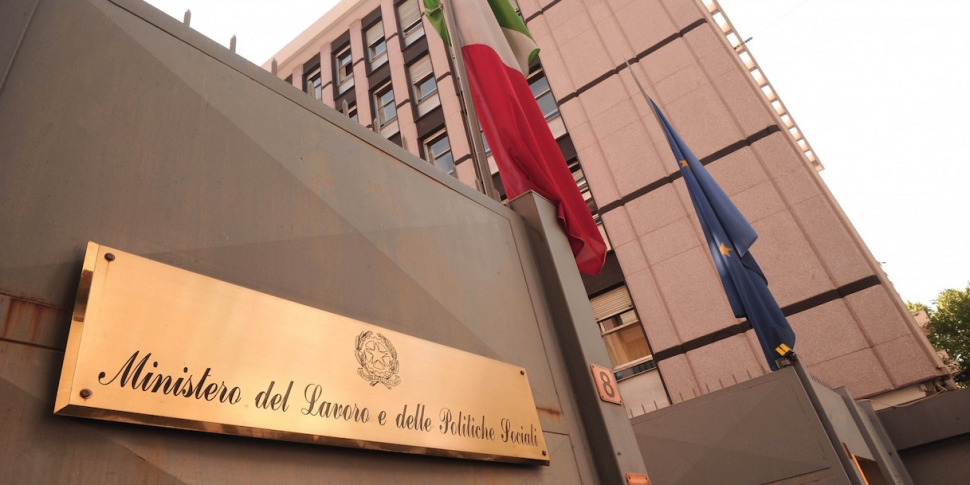
The third meeting dedicated to the Konecta R, former Abramo Customer Care dispute at the Ministry of Labor concluded with the signing of an agreement on the request for extraordinary redundancy fund (CIGS). A step deemed necessary to guarantee employment continuity and accompany the company recovery plan.
Present at the institutional table were representatives of the ministry, the regional councilor for Labor of Calabria Giovanni Calabrese, managers of the labor department and MIMIT, as well as the national and regional secretariats of SLC-CGIL, FISTEL-CISL, UILCOM-UIL, UGL Telecommunications and the RSAs of the Calabrian production sites.
During the meeting, the company reiterated the difficulties already highlighted in previous discussions, in particular linked to the lack of prospects for dematerialisation activities, now close to completion in the current tender lot. A critical issue that makes it necessary to resort to social safety nets to maintain employment levels.
Ample space was dedicated to the analysis of the recovery plan presented by Konecta R, considered a central element for transforming the CIGS into a recovery tool. The project involves the development of new initiatives on a national scale, the extension of dematerialisation to other regional archives and the activation of citizen assistance services, including the “single toll-free number”.
A positive signal, although still limited in volumes, is represented by the acquisition of a new contract in the dematerialisation sector. The trade union organizations have underlined how the use of CIGS can only be supported if included in a concrete relaunch plan, which has digitalisation – already at the center of the ministerial agreement of 19 December 2024 – as the engine to guarantee an employment future for former Abramo workers and the entire BPO sector.
The signed agreement provides for constant monitoring of some key points: the development of the industrial plan and the acquisition of new orders, the fair rotation of staff (with a maximum use of 80% of workable hours) and the regular payment of social safety nets directly in the pay slip.
Unions, institutions and companies agree on the need to continue the discussion in a constructive way, with the aim of reducing the transition phase to a minimum and arriving at a definitive relaunch. A decisive role, in the future, could be played by the tenders announced by the State Printing and Mint Institute, in which significant public investments are already planned. Finally, the trade union organizations provided updates on upcoming meetings and developments in the dispute.