

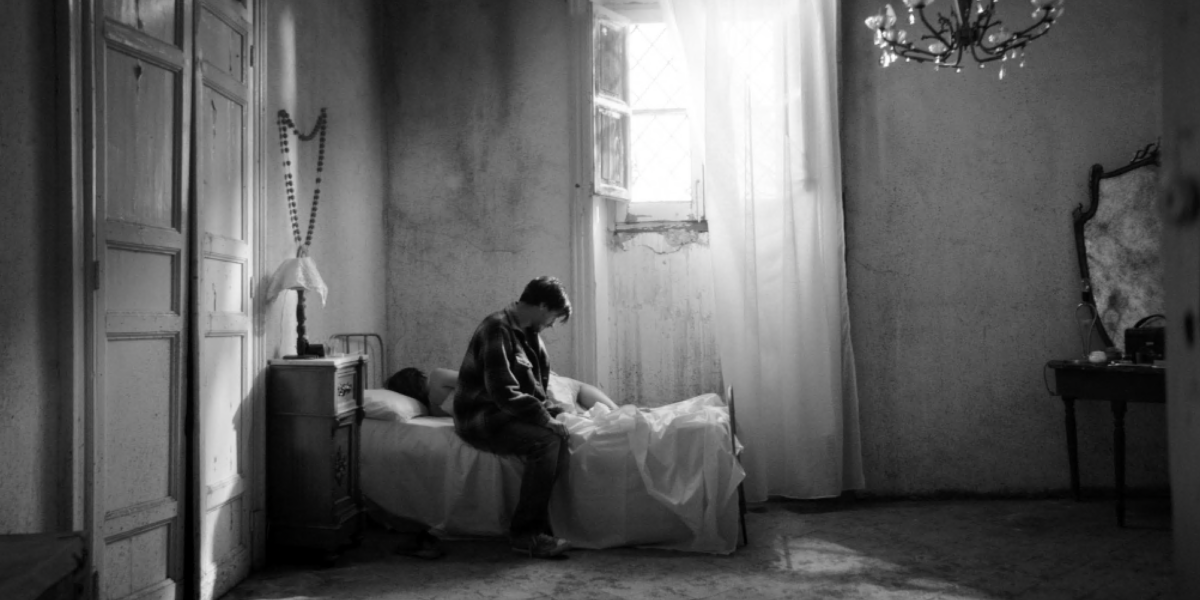
There is a Sicily that cinema has told to the point of exhaustion: sunny, touristy and picturesque, even pleased with its own stereotype. And then there is the Sicily of «Lo scuru», where the light burns, dazzles and flays the faces of its protagonists, evoking the naves of churches, the sacredness of worship, the dark ravines of memory. Based on the novel of the same name by Orazio Labbate, published by Bompiani, «Lo scuru» marks the cinema debut of Giuseppe William Lombardo and brings that visionary and restless universe of the Sicilian writer to the big screen for the first time.
From the novel to the big screen
The film, based on a story by Pietro Seghetti and Lombardo, is produced by Gray Ladder Productions, co-produced by Colina Paraiso and distributed by Academy Two; at the center is a young man tormented by nightmares and the burden of a diagnosis of schizophrenia who returns to Sicily to seek the origin of his illnesses. A journey into the unconscious, among the whispers of the countryside, the silence of the churches, the collective memory and the ghosts of the island, where personal pain is linked to Sicilian spirituality by recalling an ancestral evil.
Orazio Labbate – born in ’85, editor, writer and literary critic, originally from Butera – for years has stubbornly pursued a literary path that has reinvented and renewed the Sicilian Gothic, an independent authorial path reiterated with pride: «I have chosen to go beyond the stereotypes linked to our land such as sunshine, cotton candy linked to its traditions and religiosity in a classic version. Sicilian Gothic intends to disrupt everything, joining American Gothic for religious fanaticism, evoking an isolated place that leads to an ontological reflection on the individual, rereading Sicily with an inverse perspective that Consolo and Bufalino had already revealed”.
Sicilian Gothic according to Labbate
A dark Sicily is therefore possible and Labbate continues: «There is an entirely Sicilian pain of feeling isolated in the face of the wonders of religion». All the freedom claimed by the author, however, also continues with his new novel, «Chianafera» (NNeditore), in which the author «overturns the autobiographical perspective and the culture of whining, approaching the mythological question linked to autobiography, in the search for a new personal voice».
For all these reasons, the transition from page to set was by no means a given: «Lo Scuru is a complex, very ambitious film – states the producer, 37-year-old Alessandro Regaldo – and the choice to finance it was risky but rational, because I believe in new voices, I appreciate Orazio’s writing and the director’s vision immediately thrilled me». Regaldo continues by revealing: «The Sicilia Film Commission immediately gave us funding while the Ministry of Culture denied it twice. We were excluded for a very short time, frankly it was frustrating to the point that I chose to invest myself and once the film was finished, the funding from the Ministry also arrived. The strength of the Scuru? A film that has the canons of the Gothic and the quality of an auteur film. A perfect synthesis, not an exercise in style for the initiated few.”
The cast and the director’s vision
A film that draws strength from a strongly local imagination and reinterprets it without fear of daring, surprising, even disturbing the viewer. Giving substance to this universe are Fabrizio Falco, Daniela Scattolin, Simona Malato, Guia Jelo, Vincenzo Pirrotta, Filippo Luna and Fabrizio Ferracane, a cast that brings together faces from Italian arthouse cinema and Sicilian theatre, interpreters capable of inhabiting a material that is both physical and psychological.
Giuseppe William Lombardo – born in Palermo in 1994 – is the director, making his feature film debut with great artistic freedom: «For me, the encounter with Lo scuru was a truly thaumaturgical experience, making this text an object of personal worship. I immediately imagined making a film but I didn’t want it to be a carbon copy of the book, rather, my personal investigation, respecting its atmosphere and stylistic care. To do this I took his baroque language and reread it through my lens and my black and white imagery, openly recalling the photography of Ferdinando Scianna.”
Between illness, superstition and memory
An intimate and very personal vision that recalls three crucial elements: the nature of pain, the power of the mind and the recall of Sicilian folklore. «I wanted to include the element of psychiatric illness as a key theme of my story, causing diagnosis and curse, schizophrenia and superstition, individual trauma and hereditary guilt to collide». It is precisely from this collision that the intrinsic strength of the film arises, not from folklore intended as decoration, but from the way in which magical thinking survives when science is not enough to name the pain.
The black and white evoked by Lombardo is not an aesthetic quirk, but a moral grammar: a Sicily of dazzling whites and deep shadows that affect the faces of the actors, where light and mourning coexist in the same frame. The strength of «Lo scuru» sinks its hands into the mind of the spectator, into the blood of the earth, into the diagnosis as well as into our religiosity. All these elements coexist in the same darkness.
In that darkness, Sicilian Gothic finally finds its cinema, as an ancient expression of pain. A Sicily that doesn’t ask to be explained. But to finally be seen.