

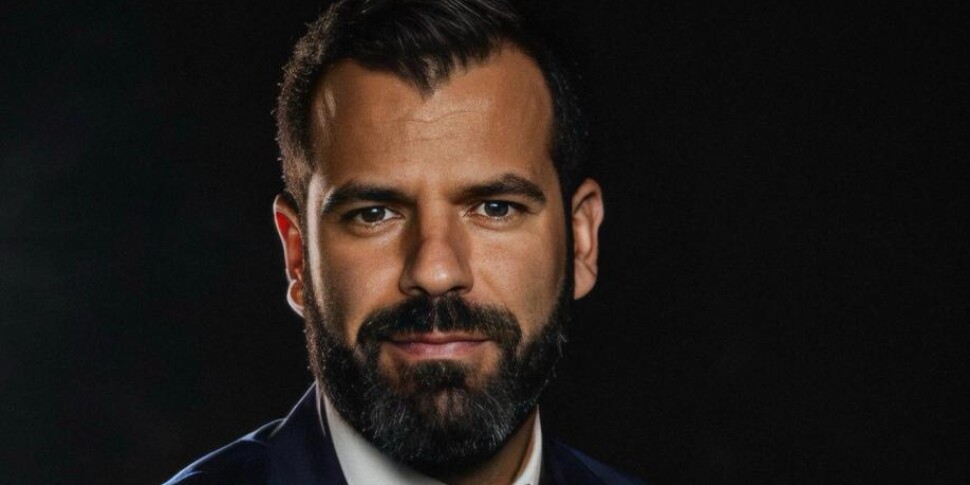
There is a thin thread that unites the streets of Paola, in Calabria, to the laboratories of the University of Kentucky in the USA, to the classrooms of the Polytechnic School of Lausanne in Switzerland, and to the corridors of the Sapienza University of Rome. That thread is called Eugenio Barone: 44 years old, Full Professor of Biochemistry, one of the most recognized neuroscientists in Italy in the field of neurodegenerative diseases, and today the recipient of an award conferred by the Mayor of the City of Cosenza, Franz Caruso, on behalf of the entire municipal administration of the entire city.
A passion stronger than any manual
“Research requires study, tenacity and commitment, but above all passion. You have to have fun in what you do.” It is the message that Barone brings every time he meets young people: an explicit invitation not to stop following what he is truly passionate about, even when the path seems uncertain or long. His personal story is the most concrete demonstration that it works: born in Paola, graduated with honors in Chemistry and Pharmaceutical Technologies from the Department of Pharmacy of the University of Calabria, he obtained a doctorate in Neuroscience from the Catholic University of the Sacred Heart in Rome.
Then America: formative years at the University of Kentucky, in Lexington, followed by the experience at the Brain Mind Institute of the École Polytechnique Fédérale de Lausanne (EPFL), in Switzerland. The return to Italy came in 2014, thanks to a Marie Curie Fellowship, the European Union scholarship reserved for the best young European scientists. At La Sapienza in Rome he built his research group and became, among the youngest in his sector, Full Professor. Today he has signed over 110 scientific publications in international journals, with an H-index of 45, numbers which, at 44 years of age, speak for themselves. He has won competitive funding from some of the most selective national and international institutions in the world such as the Alzheimer’s Association, the Jérôme Lejeune Foundation, the European Commission, the Ministry of University and Research. The message for young people who hesitate when faced with a difficult choice is simple: passion is not a luxury, it is the most competitive resource there is.
A molecular thread between diabetes, Alzheimer’s and Down syndrome
Insulin is not only the hormone that regulates blood sugar levels: in the brain it plays an essential role in the survival of neurons, the formation of memory and the energy metabolism of nerve cells. When this signal becomes jammed — a phenomenon known as brain insulin resistance — the brain loses one of its most important weapons against aging and neurodegeneration.
The crucial discovery of Prof. Barone’s laboratory concerns precisely this mechanism: his group was the first to clarify the molecular basis through which the signal of insulin administered intranasally exerts neuroprotective effects in the brain, paving the way for a concrete therapeutic strategy for Alzheimer’s disease. Intranasal insulin reaches the brain directly, bypassing the systemic circulation, and activates a cascade of signals that protect neurons from degeneration: identifying the precise molecular mechanisms of this protection required years of experimental work and is today an internationally recognized reference.
This line of research is closely intertwined with the study of Down syndrome. Those born with trisomy 21 carry with them an overabundance of proteins encoded by chromosome 21, some of which, primarily the APP protein, precursor of amyloid, are directly involved in the development of Alzheimer’s. The result is a lifetime risk of dementia exceeding 90%, with onset around the age of 50-55, more than a decade earlier than the general population. Prof. Barone was the first to demonstrate that cerebral insulin resistance also sets in early in the brains of people with Down syndrome, representing a molecular risk factor that precedes clinical symptoms and that links, on precise biochemical bases, intellectual disability, metabolism and neurodegeneration.
BVR-A: the molecular sentinel that anticipates the disease
At the center of this triad, insulin resistance, Alzheimer’s, Down syndrome, there is a protein discovered by Barone’s laboratory: BVR-A, Biliverdin Reductase A. Pioneering studies by his group have identified BVR-A as a biomarker capable of signaling the onset of cerebral insulin resistance even before the classic markers of Alzheimer’s become detectable. BVR-A alterations are accompanied by mitochondrial dysfunction, the deterioration of the cell’s energy plants, and excessive oxidative stress, two key mechanisms in the brain aging process.
To measure these signals directly in the brain, without invasive procedures, the laboratory exploited extracellular vesicles of neuronal origin. These microscopic “packets” released by neurons in the blood were already known to the scientific community: what Barone’s group demonstrated for the first time is that, by isolating the fraction of brain-derived vesicles from the peripheral blood of people with Down syndrome, it is possible to detect markers of insulin resistance specifically in the brains of these people. A non-invasive approach, starting from a simple venous sampling, with significant diagnostic potential.
Towards precision medicine: sex differences as a key variable
The most recent frontier of the laboratory’s research looks at precision medicine. Ongoing studies are exploring how biological differences between the sexes influence brain vulnerability to insulin resistance and neurodegeneration: women and men do not respond identically to the same risk factors, nor to the same treatments, and understanding these differences at the molecular level is essential to develop truly personalized therapies. A paradigm shift that could redefine the way medicine approaches not only Alzheimer’s and Down syndrome, but an entire class of metabolic and neurodegenerative diseases.
Calabria as a point of arrival, not just a starting point
The connection with the land of origin is not only biographical: it becomes, at this moment, a concrete project. On 10 April 2026, in the Aula Magna of the University of Calabria, Barone will chair the Medical Conference of the Senza Limiti Festival, dedicated to clinical research on Down syndrome. The event, organized together with the 3×21 association “I Sogni di Saveria” and the Italian Task Force for Down’s Syndrome, will present three ongoing clinical studies aimed at improving cognitive functions, and will mark an important institutional step: the launch of the project for a new Translational Medicine Center at UniCal, thanks to the great sensitivity and foresight of the Magnificent Rector Prof. Gianluigi Greco and the Director of the Department of Pharmacy and Health Sciences and Nutrition, Prof. Vincenzo Pezzi.
The center will be conceived as an integrated clinical and research infrastructure, capable of guaranteeing continuity of care from pediatrics to adulthood, integrating multidisciplinary skills and generating data, biomarkers and innovative therapeutic strategies. The University of Calabria’s vocation for artificial intelligence and digital innovation will be a distinctive element of the project, with concrete applications on the autonomy and quality of life of people with Down syndrome. Bringing a similar center to Calabria means filling a real healthcare gap and creating, in the area, a structure capable of connecting families, clinicians and researchers on an ongoing basis.
“Scientific research is not just useful for curing diseases: it is useful for building a more just society. Improving the lives of people with Down syndrome means widening the space of possibilities for everyone.”
A rewarded career, a commitment that continues
With over 110 scientific publications, an H-index of 45, a patent and awards from the Society for Redox Biology and Medicine, the Federation of European Pharmacological Societies, the Alzheimer’s Association and the Trisomy 21 Research Society, Eugenio Barone represents one of the brightest examples of scientific excellence born in Southern Italy and projected onto the international scene. In 2024 he chaired the Organizational Committee of the 5th International T21RS Conference on Down syndrome in Rome, which brought together over 1000 people including researchers, doctors and families. He is Associate Editor of international journals and member of the European Brain Research Area for the Trisomy 21 cluster.
The motivation for the recognition reads: «To Prof. Eugenio Barone, for the high value of the scientific contribution offered to Alzheimer’s research. With profound admiration for the tenacity and excellence demonstrated in tracing new diagnostic horizons and for having transformed academic knowledge into a precious tool at the service of the community.”
Today’s recognition adds to a career built with method, rigor and that passion which, as Prof. Barone himself repeats to the young people he meets, is not found in manuals: it is carried within. And, if you have the courage to follow it, it takes you far.