

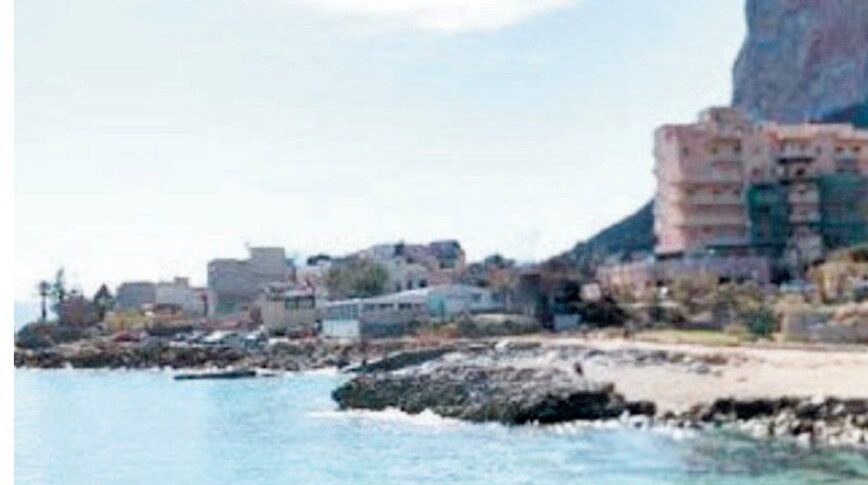
A story that I believe is urgent to rediscover and which I encountered having taught for 23 years at the Wojtyla Arenella Comprehensive Institute in Palermo, in the seaside villages of Arenella and Vergine Maria, which were affected by the devastation of the territory between the 1960s and 1970s.” This is how Vanessa Ambrosecchio, a writer and teacher from Palermo, speaks about her «The Lionesses of Virgin Mary» (Mesogea) who, thanks to «school work», discovered and constructed together with students, colleagues, parents, witnesses, reconstructs «a true and forgotten story that occurred in the period of the Sack of Palermo in those seaside villages».
Between 1964 and 1979 the women of that area, «the Lionesses, protested by opposing the corrupt politics and mafia logic that governed the city, to impose the closure of a landfill at the sea that disfigured the cliff and caused frequent accidents to the detriment of the little ones. Four children died when they were hit by trucks that rushed to spill the water; others were seriously injured: innocent victims to whom no one has ever done justice.” But this strong story, which contains many, is also a “narrative reportage” that gradually makes the memory grow, while recounting the facts at a fast pace and describing the places, including cultured references, lyrical passages and literary echoes.
A history and geography lesson (the book is also a reflection on how to teach history and geography at school), which makes the reader relive the events “as if he were seeing the frames of a documentary film scroll by”, with its structure organized “as in a montage”, between news, reflections, memories, descriptions, testimonies. And with the urgency of conveying to the reader the need to appropriate that story; for this reason Ambrosecchio chose the narrative “you”, “a you to yourself, but which challenges the reader, inviting him to be curious and understand the facts, considering that no one in Palermo knows this story, forgotten even by those who wrote the news articles consulted in my research between the ’60s and ’70s”.
In those years, construction was carried out with a building bulimia that distorted various places in the city, including “Edenic microcosms in which the relationship with nature and the sea was almost osmotic” like the seaside villages on the south coast of Palermo. There were protests, denouncements (the newspaper L’Ora played an important part on that occasion), and it was the women, the mothers, the Leonesses, who put themselves on the front line, but nothing changed.
After the revolt of 1964, exactly fifteen years later, in 1979, they wanted to reopen that very landfill and it was the daughters of those Lionesses, commoners and students together, who led a battle of women who occupied the Yellow Hall of the Municipality and finally obtained the definitive closure of the landfill. A second victory, in the wake of those intrepid women.
«A fuse – says Ambrosecchio – which triggered many others because neighborhood committees arose everywhere in Palermo protesting against the many landfills present even in the center. Discovering that what seemed like a sleeping city, as it has become again today, had this desire to react, makes us understand that it is possible to get together and fight to achieve something.”
A lesson in civil commitment and collective and choral struggle that our troubled times would greatly need.