

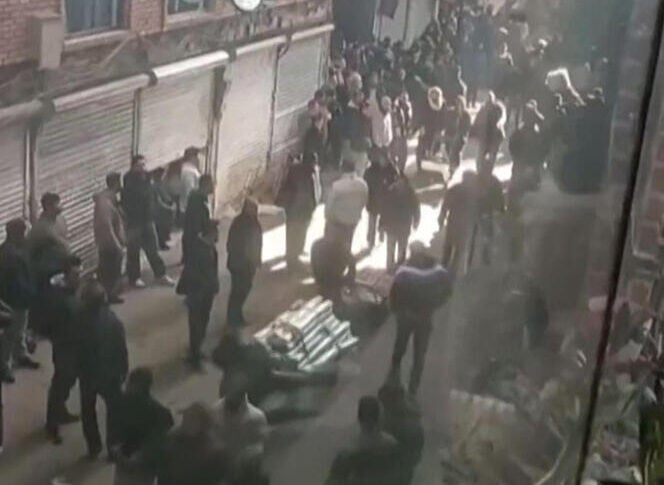
Over the two days of January 8 and 9 alone, “over 30,000 people may have been killed on the streets of Iran”: Time magazine writes, quoting two senior officials of the Iranian Ministry of Health who remained anonymous.
Sources reported that on those two days, a Thursday and a Friday, supplies of body bags ran out and ambulances were replaced by eighteen-wheeled tractor-trailers. The estimate of 30,304 deaths, Time writes, does not take into account the wounded admitted to military hospitals who died subsequently, or the victims in areas where no tolls were provided.
According to what Time has reconstructed over the last few weeks, witnesses report that millions of people were on the streets when the authorities blocked the Internet and all other communications with the outside world. Eyewitnesses and cell phone footage show snipers stationed on rooftops and trucks equipped with heavy machine guns opening fire. On Friday 9 January, a Pasdaran official warned anyone who ventured into the streets on state TV that “if a bullet hits you, don’t complain”.
The days of protest on the 8th and 9th saw a surge in demonstrations, also following the stance of US President Donald Trump, who in the previous days had threatened the Iranian regime with military intervention if it continued its repression. Time compares the massacre in Iran to that carried out by the Nazis on the outskirts of Kiev, on 29 and 30 September 1941, when they massacred 33,000 Ukrainian Jews in Babyn Yar.