

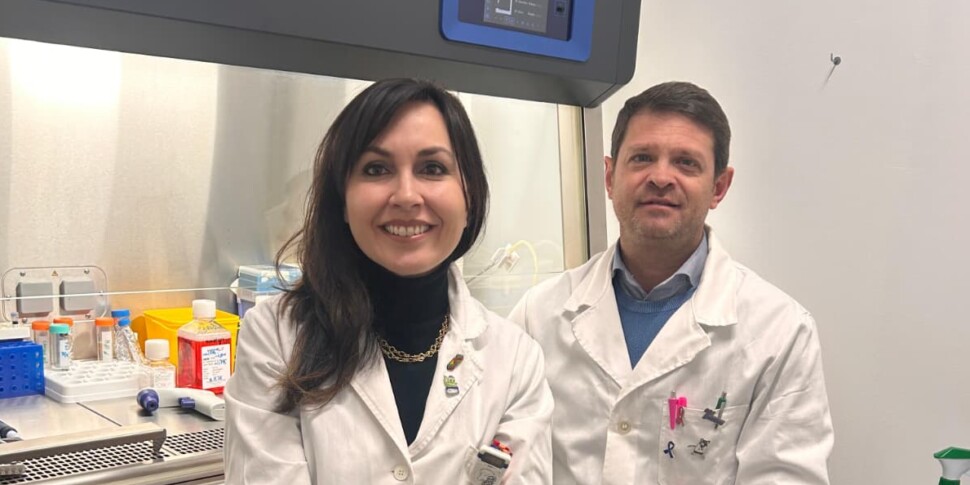
A new perspective in the fight against breast cancer comes from the University of Calabria. A team of researchers from the Department of Pharmacy and Health and Nutrition Sciences has demonstrated, for the first time, that silodosin, a drug currently used in the treatment of benign prostatic hypertrophy, has effective anti-tumor activity against breast cancer.
The study was conducted in the Microbiology, Hygiene and Public Health and Molecular Biology laboratories, coordinated respectively by Professor Michele Pellegrino and Professor Paola Tucci, and was recently published in the journal Cell Death and Discovery of the Nature group.
The study conducted in the laboratories of the University of Calabria
«The objective of the research – the two professors explain to AGI – was to evaluate the anti-tumor potential of silodosin in human breast cancer, an area in which the drug had never been studied». The results obtained demonstrate that the molecule is able to inhibit the proliferation and growth of breast cancer cells, both estrogen-responsive and non-responsive, inducing cell cycle arrest and apoptosis.
«This is a study that demonstrates how silodosin, a drug already used for benign prostatic hypertrophy, can have anti-tumor effects in breast cancer. We have observed that it is able to slow down the growth of tumor cells, block their proliferation and induce programmed death”, add Pellegrino and Tucci.
The two teachers also underline the value of the work in terms of the so-called pharmacological repositioning. «In practice, we use a drug already approved for a new therapeutic indication. This can reduce time and costs compared to the development of new drugs and accelerate the arrival of new therapies for patients”, they explain.
Possible developments for the more aggressive forms
According to what emerged from the research, silodosin acts on multiple fronts: it reduces the proliferation of tumor cells, limits their ability to migrate and hinders the formation of three-dimensional structures that simulate the tumor in vivo. Furthermore, the drug has also proven effective on particularly aggressive forms, such as triple-negative breast cancer.
Among the aspects considered most innovative by the researchers is the mechanism of action observed during the study. «We discovered that silodosin not only acts on its classic target, but can also bind to estrogen receptors, which are fundamental in the development of breast cancer. This suggests a double-target action, which is very promising”, the teachers further explain.
The results, although considered encouraging, currently remain confined to the preclinical phase. «In vivo studies and subsequently clinical trials will be needed to confirm efficacy and safety in patients», they specify.
The discovery could prove particularly important, especially for patients with forms of breast cancer that are more aggressive or resistant to currently available therapies, such as triple-negative. The study, the researchers highlight, is the result of collaboration between different laboratories and skills, from molecular biology to computational modeling up to cellular studies. A work carried out entirely in the laboratories of the University of Calabria, which confirms the contribution of the Calabrian academic reality to international oncology research.