

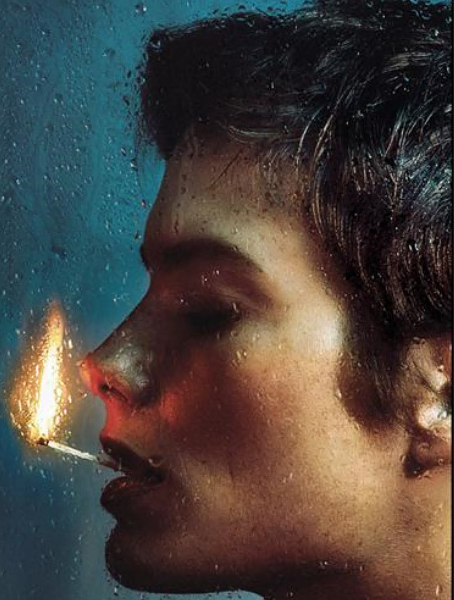
All things that shine too much risk catching fire and therefore need to cool down so that their good can be understood. Among those flashes, some of which are deceptive, there is something to really burn. Or there is a way to see a guide sign to understand and understand each other. Chasing the flashes Camelia, narrator of «Bagliori» (Einaudi, in the Unici series), the beautiful debut novel by Beatrice Pera, born in Ceva in 1994, but resident in Turin, from where she moves for her activity as tour leader around the world, a passion job like that of writing.
Nineteen-year-old Camelia, the narrator, is a girl who grew up with other orphans like her in a community in the Ligurian hinterland managed by the charismatic Sister Rosa, who has dedicated her entire life to silent care. One day in a clinic he meets Dalila, who with her daughter, little Lucia, lives in a gloomy shelter, nicknamed “Overlook”, like the hotel in The Shining. They both, Camelia and Dalila, have a painful experience, Dalila is still burned by the fact of having had a toxic partner, now dead, the father of her daughter, Camelia doesn’t know who her parents are. They are “defective” girls from “defective” families, in the cruel game of life they have been put to the test, and this is why they seem to recognize each other and instinctively decide to continue dating. A friendship that is based on the fragility and contradictions of each of the two, very different in character: Dalila fills the gaps in her life by speaking freely, inventing an elegance and an image far from reality, Camelia, more silent, does not know what to do with her existence, but both feel prisoners of imperfection.
Like being prey to a constant state of abandonment that Pera’s emotional writing delivers to the reader, exploring with great expressive maturity, through the naked, lyrical but without flattery story, subjectivity in its most intimate aspects.
From Coccio, the community where she grew up in a sort of extended family, Camelia would however like to emancipate herself and the means seems to be Dalila, who also wants to get away from the desolate “Overlook”. Both are inhabited by a restlessness that brings them closer to the fire, and the body is the first fire through which they burn themselves, even if they know well that it is “a banality to reduce every inexplicable behavior of the human being to malice”.
The decision to move in together while supporting themselves with work in a pub appears bizarre because the cracks of the past widen in the present, and the coexistence of two disorganized people like Camelia and Dalila who stumble, set off again, get bogged down, explore, often burning themselves, on their own wounded skin, seems to be continually questioned, through the intense excavation work throughout the novel which runs through and suggests transversal themes (such as the condition of family homes or the pollution of the Bormida Valley due to toxic gases), functional to the main story which is however focused on the value of mutual support in order to resist. Perhaps we need to accept the fact that in the world there are things that cannot be explained, not even the mystery of care and friendship whose saving power illuminates the countryside of life with its flashes.
For Dalila, dealing with Camelia’s insecurities and self-destructive temptation is an added burden on her own difficult life, opaque to herself, also gripped by self-destruction, but it is nevertheless she who in certain situations in which Camelia finds herself makes her understand that «love is what you think you have seen but it isn’t there. It’s just inside his head.” But perhaps this is friendship, it is affection and presence which, if it does not exclude doubts or mistakes, takes on that weight and transforms imperfections into something bright. Chasing the flashes to still hope, especially if there is a special little girl like Lucia to impose herself and indicate the future.