

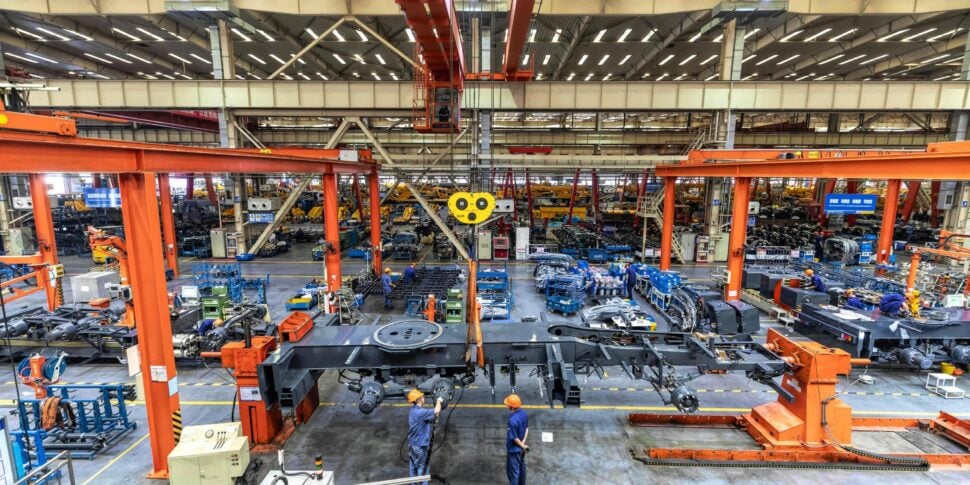
Once upon a time there were blue overalls. Now there are fewer and fewer: from 2007 to 2024, 700 thousand jobs have disappeared in Italian industry, more than one in six. Istat’s annual report photographs a profound transformation of the Italian labor market: employment is growing, but not in factories, shops and public offices. Manufacturing, commerce and public administration lost a total of 1.35 million workers, while other sectors gained almost 2 million workers, especially in health and social assistance, professional, scientific and technical activities and accommodation and catering services. These professions compensate, at least numerically, for the long crisis of the industry. From the beginning of 2022, the year of the energy crisis linked to the war in Ukraine, to the end of 2025, Italy recorded 36 months of trend contraction in the manufacturing production index. At the annual meeting of Confindustria, president Emanuele Orsini spoke of the risk of transforming Europe into “an industrial desert”, also denouncing the economic “colonisation” of China, which would destroy one million European jobs in 2025 alone. Some countries are more exposed than others. Istat compared the level of manufacturing production in EU countries between 2018 and 2025: compared to an average growth of 2.2%, Poland and Belgium recorded double-digit increases (+32.9% and +21.7%), while three of the four largest economies in the area recorded negative performances: Germany -14.3%, France -3.1% and Italy -7.4%.
Spain remained essentially stable (+0.5%). According to Istat, these trends largely reflect the differences in the sectoral structure of the industry. “Production growth was concentrated in high-tech sectors and in sectors with more stable demand, such as food, while the energy-intensive sectors that are more exposed to cost shocks and international demand, chemicals, metallurgy, paper, automotive and textiles, showed widespread difficulties,” we read in the report. In Italy, the textile-clothing sector was the sector with the greatest loss of employment: workers decreased by 40% between 2007 and 2024. Among the sectors most affected were also the wood industries, the processing of non-metallic minerals and rubber and plastic articles, which are more exposed to competition from emerging economies. Istat’s thesis is that Italy has not only lost industrial employment: it has changed its production structure. A significant share of work has shifted from manufacturing to labor-intensive services but with modest or even negative productivity growth. This supported overall employment, but contributed to keeping productivity growth weak. Since 2007, productivity in Italy has grown by just 1.4%, compared to double-digit increases in Germany (+11%) and Spain (+18%). It is a “red alert” crisis, according to the general secretary of Fiom-Cgil, Michele De Palma. «Over 100 thousand people risk losing their jobs», said De Palma, «if there were no redundancy fund in strategic sectors such as automotive (Stellantis and components), steel industry (formerly Ilva) and household appliances (Electrolux), but also in small and medium-sized enterprises».