

The shadow of a new escalation is lengthening over the war in Iran. After American President Donald Trump issued an ultimatum to Tehran on Saturday evening, threatening to “strike and annihilate” Iranian power plants if the Islamic Republic “does not completely open the Strait of Hormuz within 48 hours”, the Ayatollah regime responded that it was ready, in the event of an attack, to “irreversibly destroy” the vital infrastructure of the entire region, including desalination plants, along with “completely closing” Hormuz, where only a handful of ships have managed to pass in just over three weeks of conflict.
Openness to diplomacy
And while tensions are also flaring up in Lebanon – where Israel has signaled that it will “intensify” “targeted land” operations – a timid opening towards diplomacy seems to be coming from the United States: according to Axios, which cites its sources, Donald Trump’s envoys Jared Kushner and Steve Witkoff are creating a team to negotiate with Iran on the president’s orders, while both countries have given voice to their conditions – currently irreconcilable – to end the conflict. In recent days there have been no direct contacts between the US and Iran, but Egypt, Qatar and the United Kingdom have acted as intermediaries for the exchange of messages, according to what was reported to Axios by a US official and two other sources. Egypt and Qatar have informed Washington and Israel that Iran is interested in negotiating, but under very strict conditions, announced in the last few hours by Tasnim, the news agency linked to the Pasdaran; the end of the war against all regional groups affiliated with Iran; the implementation of a new legal regime for the Strait of Hormuz and the prosecution and extradition of anti-Iranian media workers.
For his part, Donald Trump wants Iran to commit to six fronts: no missile program for five years; zero uranium enrichment; dismantling of the Natanz, Isfahan and Fordow nuclear plants; rigorous external observation protocols for the creation and use of centrifuges and related machinery that could further a nuclear weapons program; arms control treaties with countries in the region that include a maximum limit of 1,000 missiles; no funding for affiliated groups such as Hezbollah in Lebanon, the Houthis in Yemen or Hamas in Gaza.
Unbridgeable distances
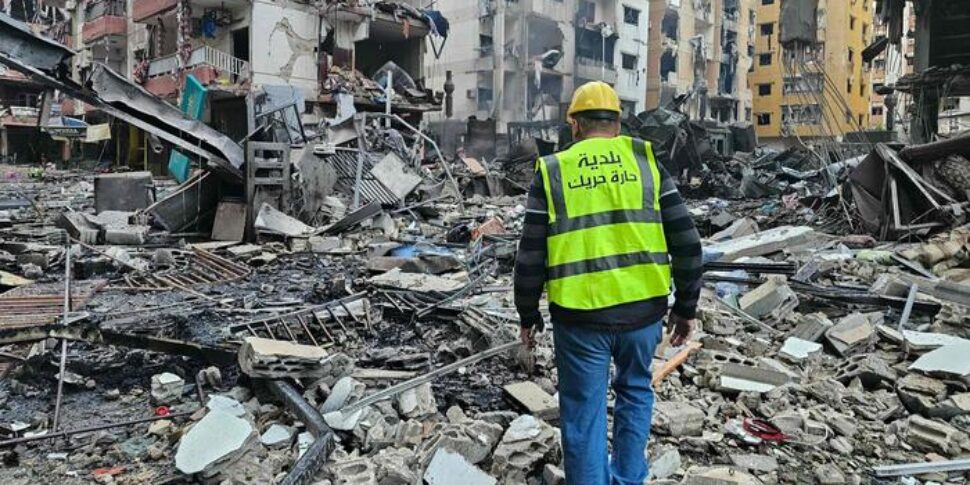
Both lists clearly show a gap that is currently unbridgeable: Iran has repeatedly rejected several of America’s requests. Regarding Iranian demands, according to a US official, Trump considers the compensation proposal “unacceptable”, while according to another official, there may be room for negotiation regarding the return of the frozen assets to Iran. With the regime’s leadership plunged into chaos, the tycoon’s team is now trying to understand who in Iran is the best point of contact for negotiations and which country is the best mediator, replacing the previous Oman with Qatar, more appreciated by Washington. While rumors spread, the war continues. With his eyes set on the expiry of Trump’s ultimatum, he meanwhile defends Netanyahu by attacking Israeli President Herzog, defined as “a weakling” and “a liar” for not having granted him a pardon. Meanwhile, the navigation block remains in Hormuz, despite the denials of Iran which is currently considering imposing a tax of 2 million dollars on boats in transit. On the other fronts, there are many wounded from the raids on Dimona and Arad, in Israel. And in Lebanon, the IDF’s announcement that it wants to intensify “targeted” land operations follows raids on bridges in the south, in particular the one that destroyed a strategic hub between Tire and Sidon. Lebanese President Joseph Aoun warned that the attacks represent “a dangerous escalation” and “a prelude to a land invasion”.