

On 13 August 2007, the body of twenty-six-year-old Chiara Poggi was found in her home in Garlasco, thus beginning a judicial affair that would span almost two decades of the judicial history of our country, triggering a forest of reconstructions (some of them very imaginative) and a heated confrontation between the parties.
Giancarla Rondinelli, a parliamentary journalist for Tg1, originally from Catanzaro, followed the developments of the case and wrote a book about it: L’Imprint. Garlasco’s lesson and Italians’ trust in Justice, a rigorous journalistic report that tries to bring order to a story that has become, over time, something much broader than a judicial case.
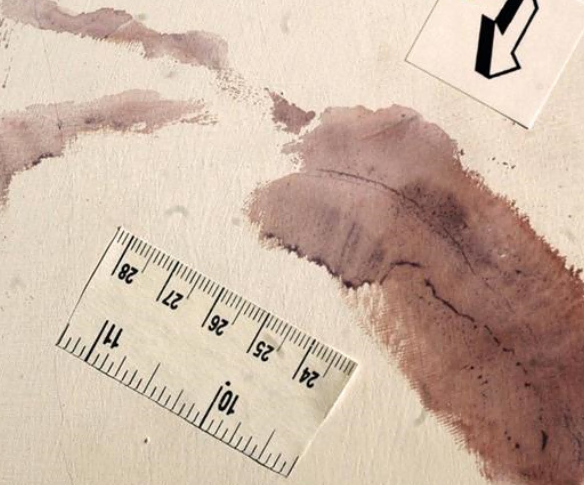
The trial of Alberto Stasi was long and contradictory, each sentence shuffled the cards, and, a year ago, the Pavia Prosecutor’s Office reopened the case. At the center of the new investigation is Andrea Sempio (friend of Chiara’s brother, Marco) initially considered unrelated to the facts; above all, there is an artefact almost twenty years old: footprint number 33, detected at the crime scene in 2007 but, at the time, classified as having no investigative usefulness. Imprint 33, in Rondinelli’s reading, becomes a metaphor for the system: something that existed but which could not yet be interpreted and which can now change the entire narrative.
Rondinelli writes with the pace of someone who knows the timing of the news and knows how to dose the information without weighing down the story; after all, the book does not anticipate conclusions (the investigation is open) but in this media turmoil, with scoops and alleged witnesses following one another, sobriety is a precise, indeed, necessary choice.
Podcasts, documentary films, fake revelations and talk shows: the Garlasco case continues to excite the public. Rondinelli attributes this persistence not to the exceptional nature of the case, on the contrary, to its normality. A girl, a boyfriend, a house. A context in which it is easy to recognize oneself, and perhaps for this reason so difficult to let go.
The imprint, published by the Calabrian publishing house Rubbettino, gives the reader the complexity of the facts and the weight of the questions still open. Above all, a question emerges that concerns us all: what relationship do we have with judicial news and why are we fascinated by it in such a disturbing way?